Adolescence Review (2025) – A Sobering Look at Gender, Misogyny, Power, and the Fragility of Growing Up!
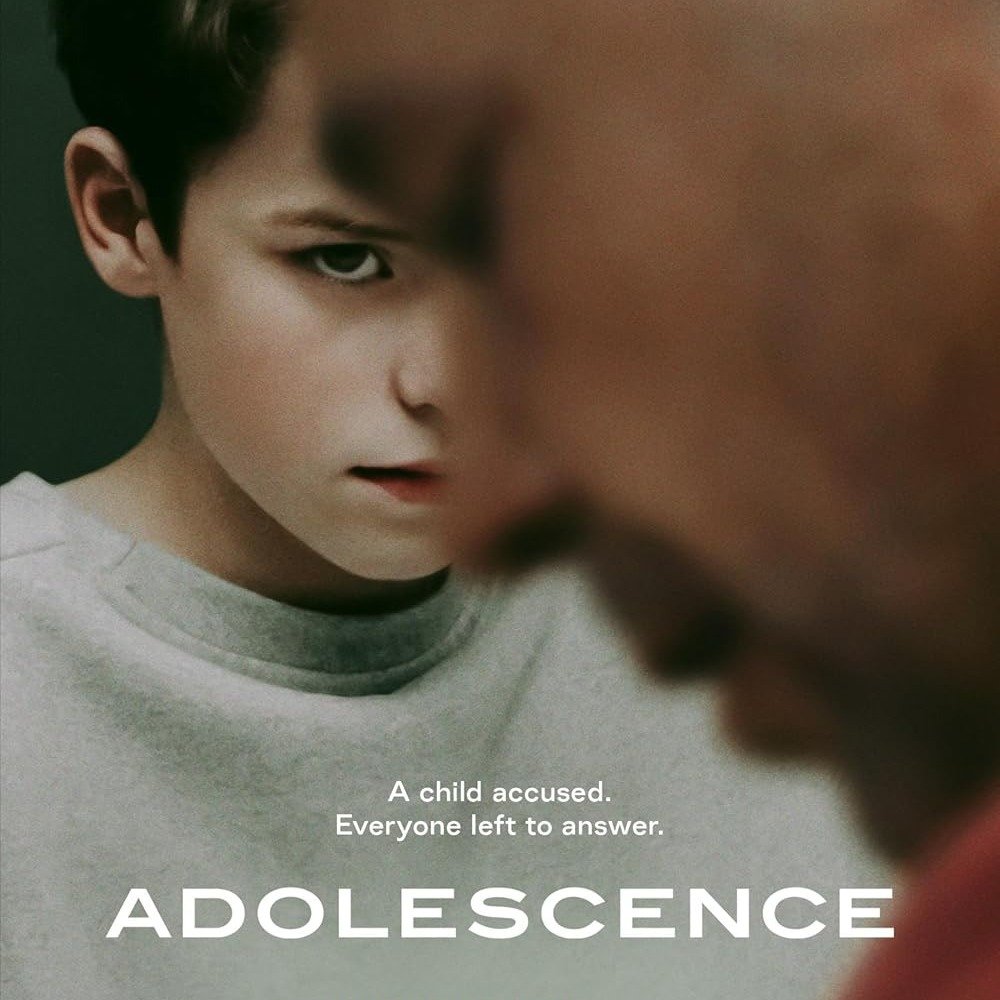
We are ending Mental Health March/Women’s History Month on a difficult but important piece. In a time when fascism and patriarchy are tightening their grip, when misogyny is being repackaged as cultural nostalgia, and when violence against women is increasingly normalized both online and in the physical world, this Netflix series feels unsettlingly relevant: Adolescence.
The show does not attempt to simplify these realities. Instead, Adolescence asks us to sit with the uncomfortable questions many societies are currently trying to avoid. What happens when young people are raised inside systems that reward dominance and punish empathy? How do cultural narratives about masculinity shape the way boys learn to see themselves, and others? And perhaps most importantly, how do those toxic narratives deeply harm boys and men, as well as women and girls?
Before we begin, a gentle but serious note. Adolescence explores themes of misogyny, body image, gender expectations, online radicalization, emotional isolation, murder, and violence. It approaches these subjects with nuance and care, but they are extremely heavy topics and may be difficult for some viewers. We potatoes found this one to be a particularly difficult watch, so please take care of yourselves while watching and while reading.
As always, we will try to avoid major spoilers, but some elements of the series will be discussed.
There is a great deal to unpack here, so let’s begin.
DAY 1
We open on a police officer, DI Luke Bascombe (Ashley Walters), eating an apple, and checking his voicemails. A little flustered from a voicemail, he heads back to the car where his partner DS Misha Frank (Faye Marsay), is waiting for him.
Getting into the car, he comments that he thinks the apples are not sitting well in his stomach. He is trying to quit smoking and is attempting to replace smoking with apples. We potatoes personally have not heard of this technique, but neither of us potatoes smoke so we truly do not know! We found it interesting, but we digress!
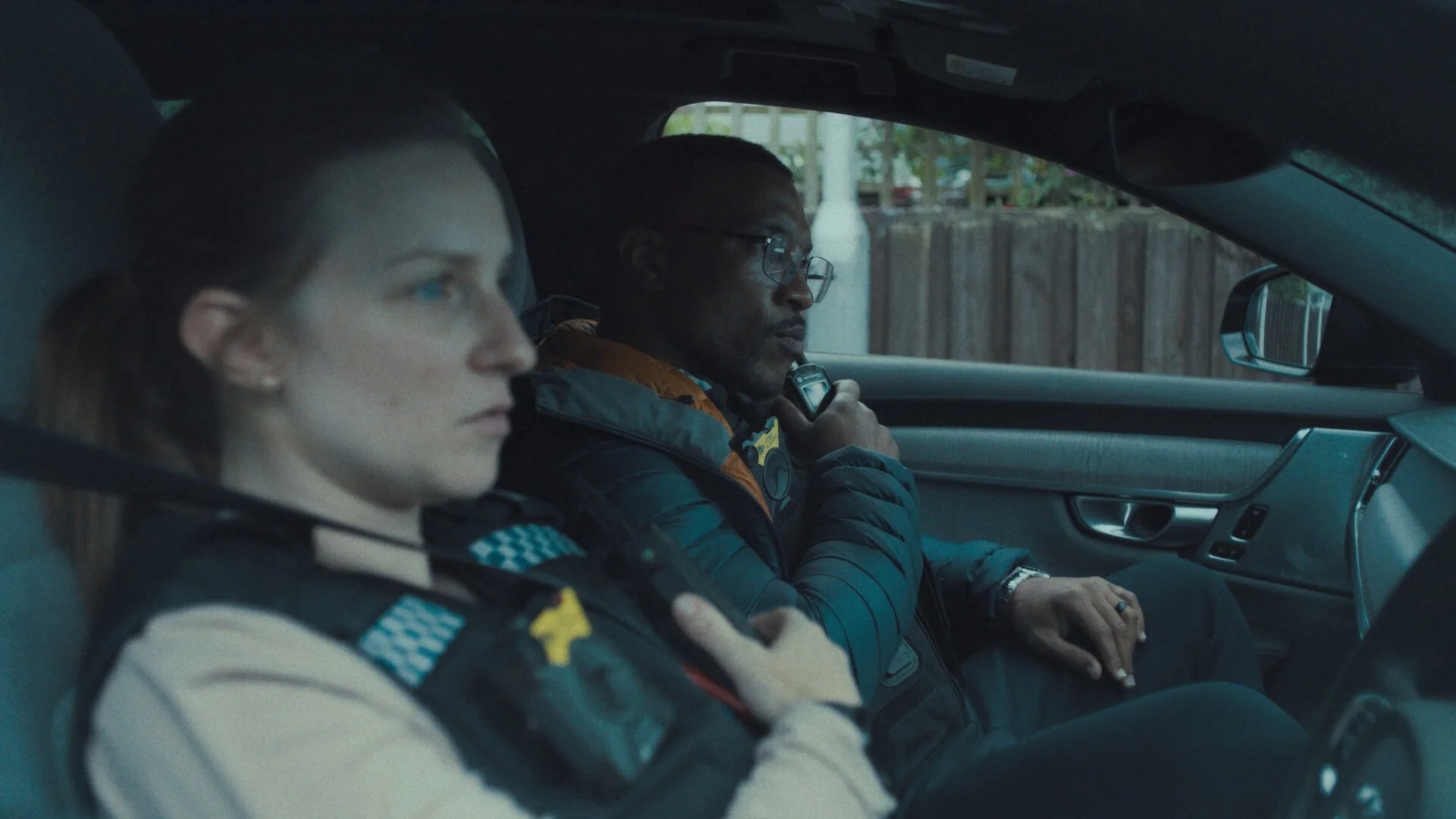
They have some casual conversation while they sit in the car. It appears that they are waiting for something… what, we do not yet know. The radio speaks, “Bravo Delta, 4-0 to Bravo Delta 5-0, are you receiving?”
DI Bascombe responds, “Bravo Delta 5-0 to Bravo Delta 6-0. Are you ready to roll out?”
Everyone is ready, and they start the car. The camera follows, and we see a long line of police vehicles. Where are they going?
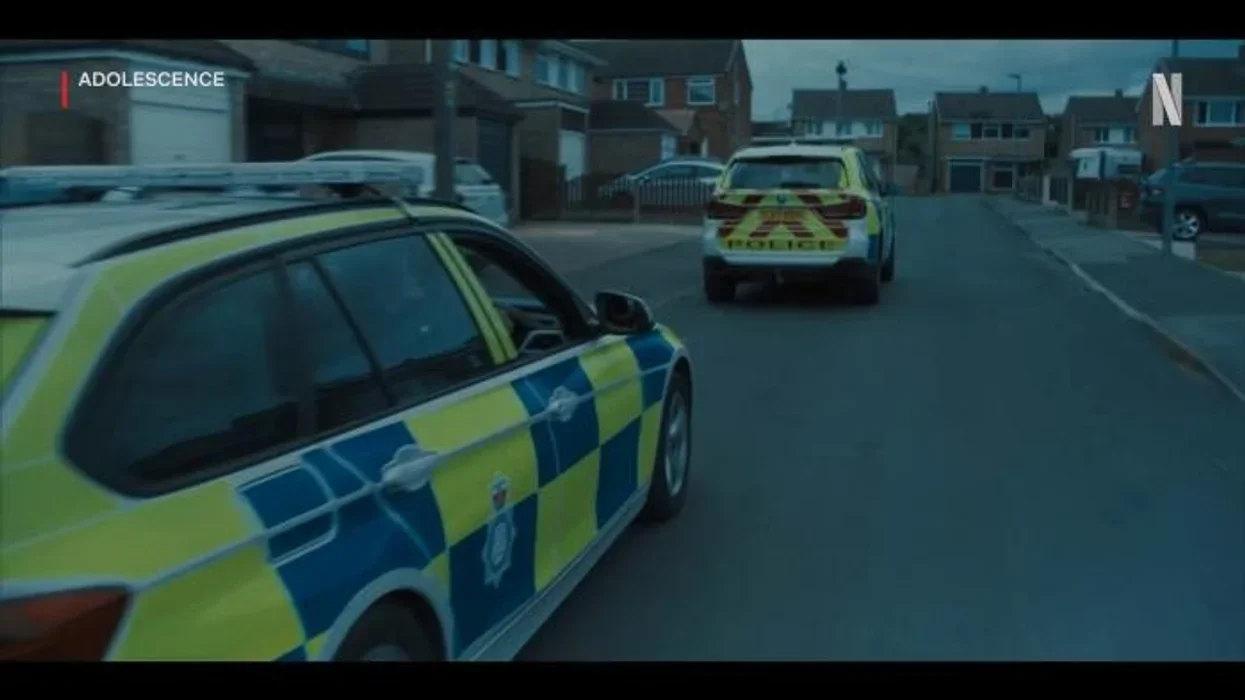
They are in what appears to be a quiet little suburb. Houses in rows. They pull up to one quiet and unassuming little house.
The morning is still shrouded in grey. There is a stillness and early morning quiet even as they pull up to the house.
What looks like SWAT quietly step out of the van, and approach the house swiftly. Officers move quickly, efficiently, and with unmistakable purpose. There is no chaos in their movements. No hesitation. This is practiced. Controlled. Serious.
They then cut through the calm with a battering ram right through the front door! They enter the home. “Police! Get down on the floor!”
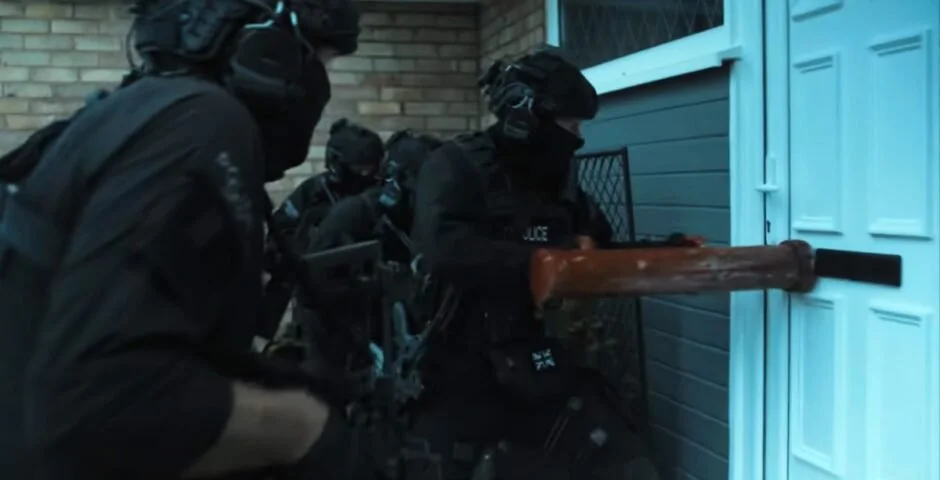
Chaos ensues as the family is jolted out of their routine. Inside, everything feels small. Domestic. Ordinary. That illusion shatters almost instantly as officer’s move through the house, calling out, clearing rooms, asserting presence.

Eddie, the father, thinks they must be there for him? “I haven’t done anything. You’ve got the wrong house, I’m telling ya. You’re making a mistake. Where you going??” The officers move right past him. They continue to search the house until they find who they are looking for.
“Police! Suspect found! Show me your hands! Hands in the air!”
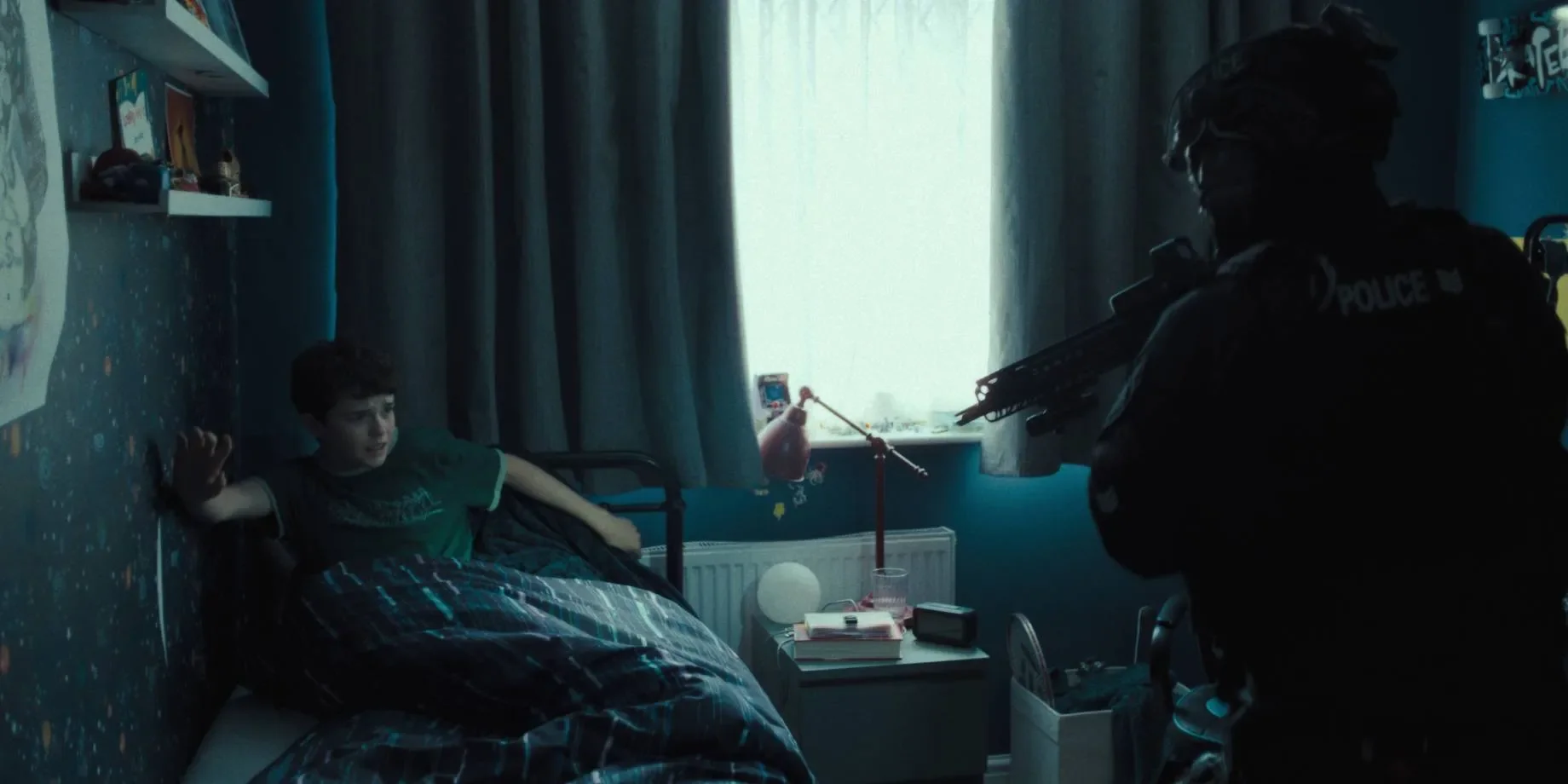
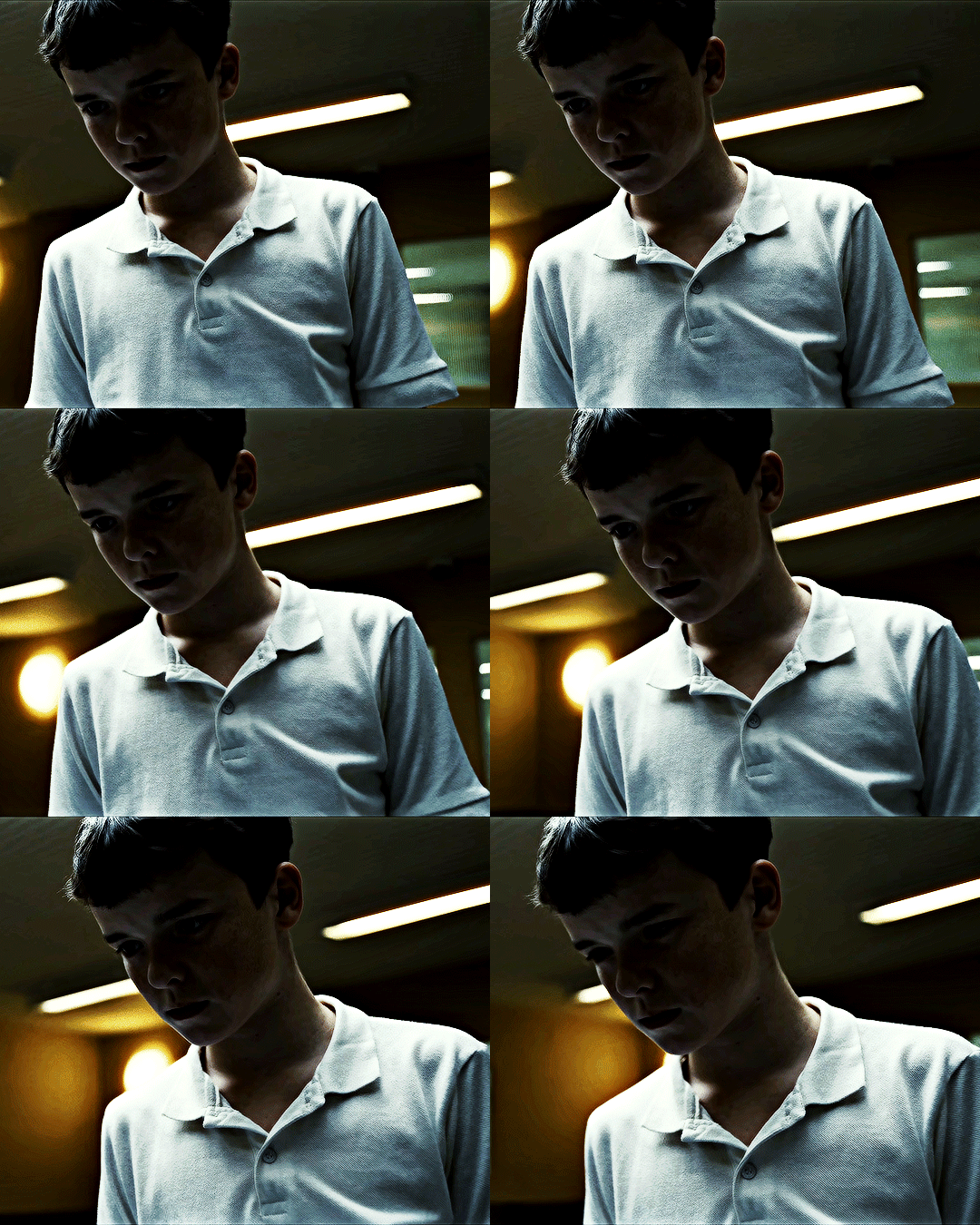
Jamie Miller (Owen Cooper) is found in his bed… he is a 13 year old child. That’s right, the police are there for their son.
Jamie is terrified. Disoriented. Still caught somewhere between sleep and reality as he is pulled into a situation he does not seem fully able to comprehend. His family, Dad, Eddie Miller (Stephen Graham), Mom, Manda Miller (Christine Tremarco), and older sister Lisa Miller (Amelie Pease), are horrified, confused, and desperate for answers that are not immediately given.
The police remain professional. Focused. But the weight of the moment is unmistakable.
DI Bascombe enters Jamie’s room calmly, “Okay. Jamie Miller. The time is 6:15 a.m., and I’m arresting you on suspicion of murder.”
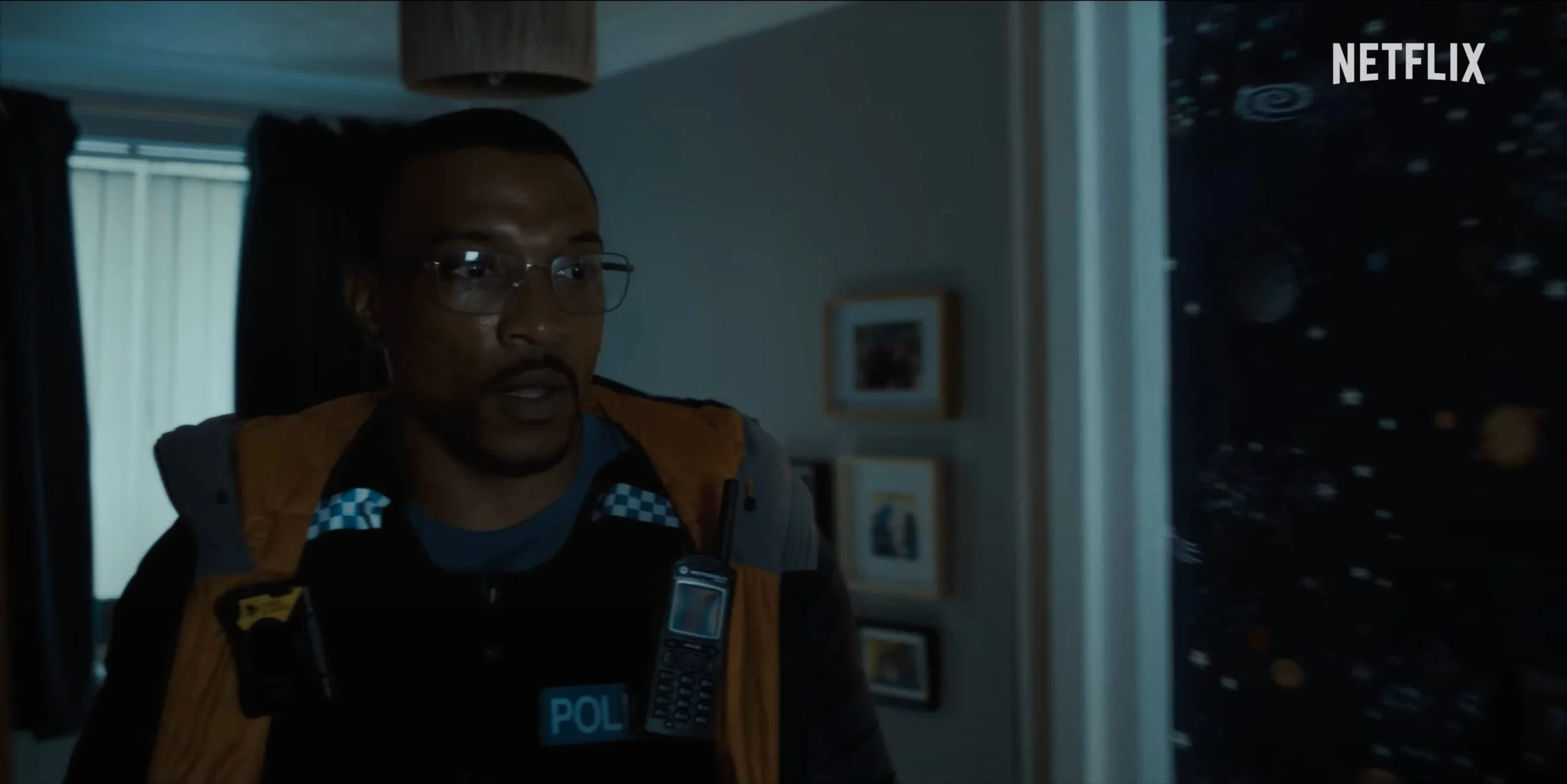
The parents become more distraught and vocal as they hear this, but DI Bascombe shuts it down. “I will arrest you for obstruction. Please stop. Please.” He continues to speak to Jamie. He finishes what he needs to say, and asks Jamie to get out of bed. Jamie stands, but is covered in urine. He had peed himself.
At first, we potatoes felt so badly for this kid. This is so scary, and we agreed with the parents! This must be some kind of misunderstanding… except it really is not.
This is not a misunderstanding. This is not a warning. This is an arrest… and while we do not want to give everything away, it is one that is warranted.
DI Bascombe, kindly suggests that Jamie would be more comfortable in clean clothing and requests that Eddie come help his son get changed.
After he has changed, he is walked out rather gently by DI Bascombe, and placed in a police vehicle to be taken to the station. DS Misha Frank explains the situation to the family briefly, and tells them that they can follow Jamie to the station, in their own vehicle.
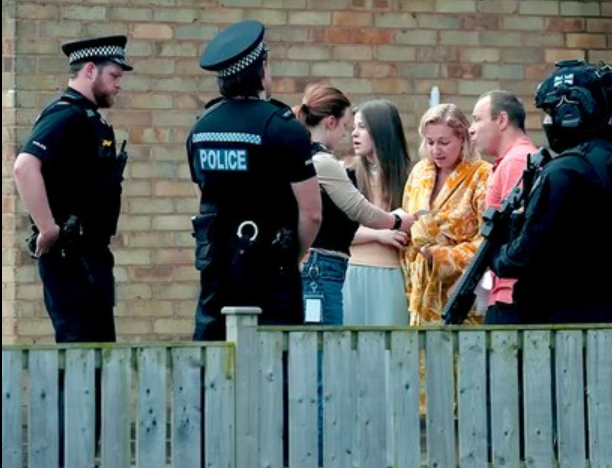
We are wrapping up from here! Jamie is taken to the station, his family arrives not too far behind him. He gets processed, and because he is a child, they take extra precautions to ensure that everything is on the up and up. Afterwards Jamie is given food, and a solicitor before they continue on to an interrogation… and the story that unfolds is quite overwhelming, maddening, and heartbreaking all at the same time.
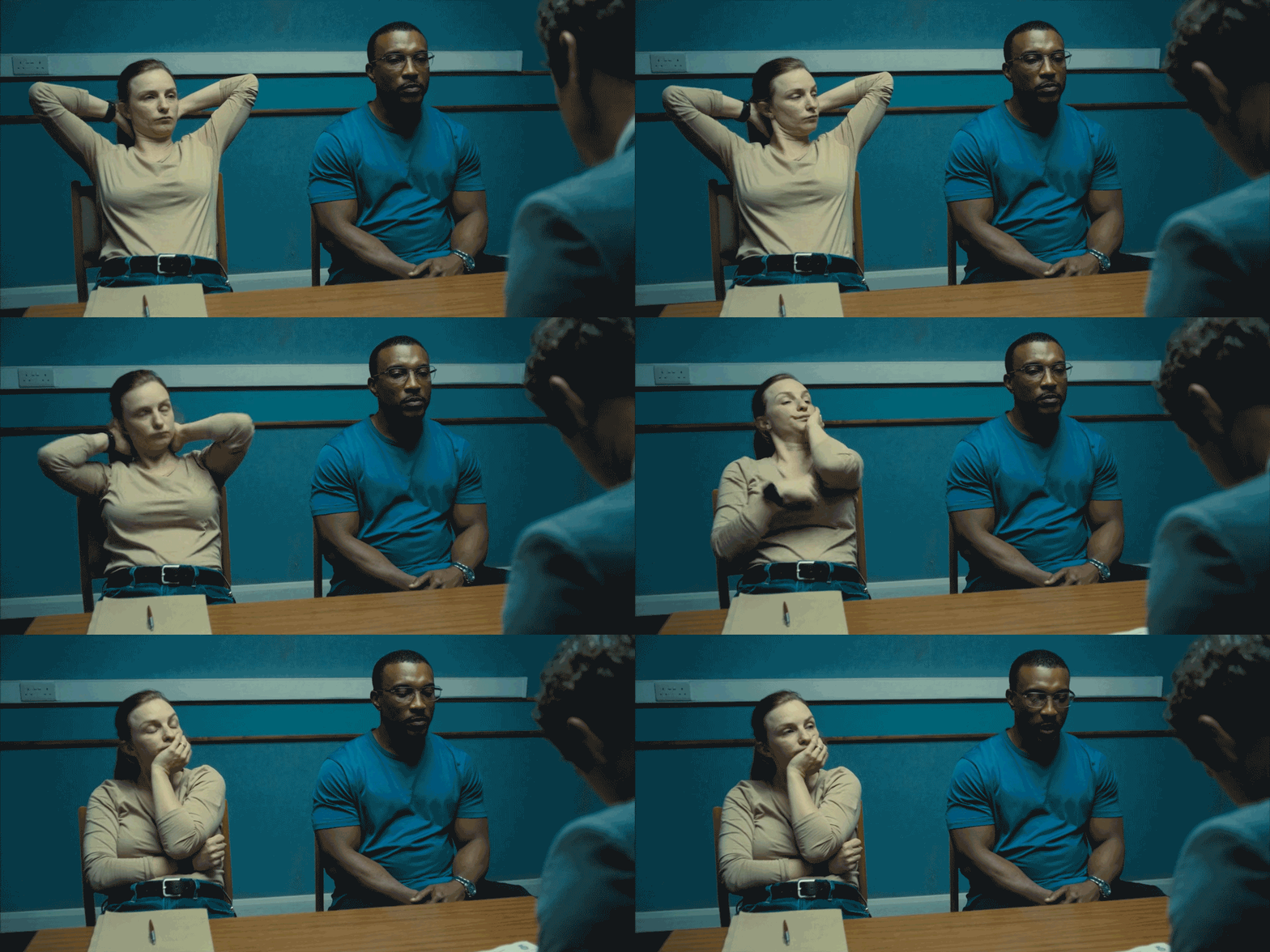
The evidence they have on Jamie… is more than damning. They have CCTV of him committing the crime. Practically clear as day. Even with this evidence Jamie denies everything. He repeats over and over again, “I didn’t do it!”
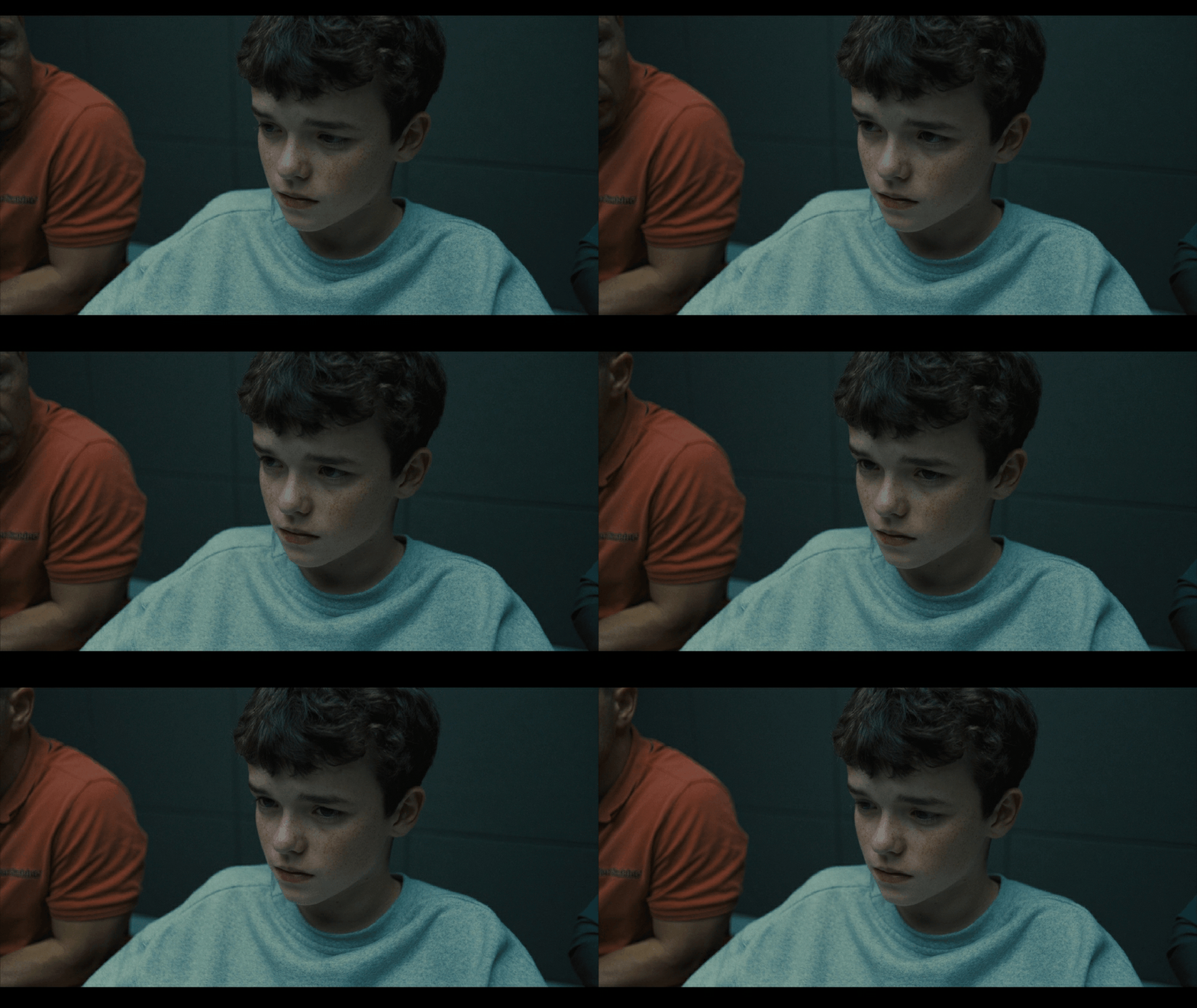
Sigh. And from that moment on, Adolescence makes it very clear that this is not going to be an easy story to sit with.
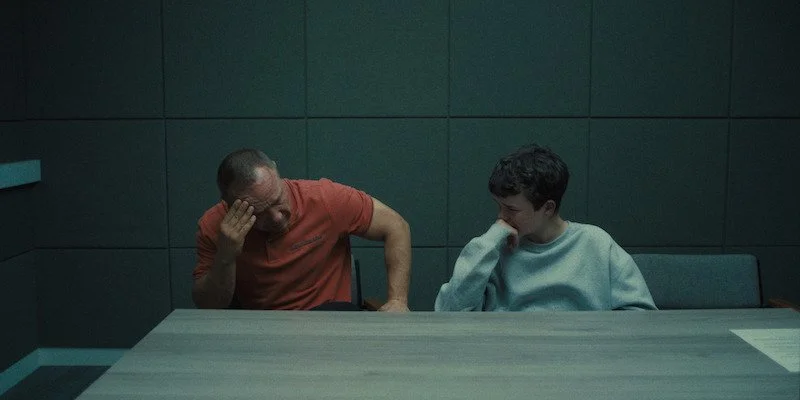
This is not a nostalgic portrait of teenage life. It is something far more uneasy.
Adolescence is deeply interested in the cultural forces shaping young people long before they fully understand them. Social media, beauty standards, gender roles, and algorithm-driven communities quietly influence how these teenagers interpret themselves and each other. What makes the series so compelling is that it never treats these influences as abstract commentary. It grounds them in the emotional realities of everyday life. A passing comment about a body. A joke that lands a little too sharply. A private online space where frustration slowly hardens into ideology. These moments accumulate, shaping how these young people see themselves, each other, and their place in the world.
One of the most unsettling threads in the series is the way misogyny is normalized among young men. The show does not portray this as cartoonish villainy. Instead, it examines how insecurity, loneliness, patriarchal conditioning, and cultural messaging intertwine to produce something far more insidious. Boys who feel invisible begin searching for explanations. Communities that promise certainty, power, and belonging become deeply appealing. What begins as frustration can quickly mutate into resentment, and resentment into entitlement. Adolescence never suggests that this process is inevitable, but it does insist that it is increasingly common. The series pays close attention to the environments where these ideas grow: online spaces that reward cruelty, influencers who frame empathy as weakness, and cultural narratives that reduce women to symbols rather than people.
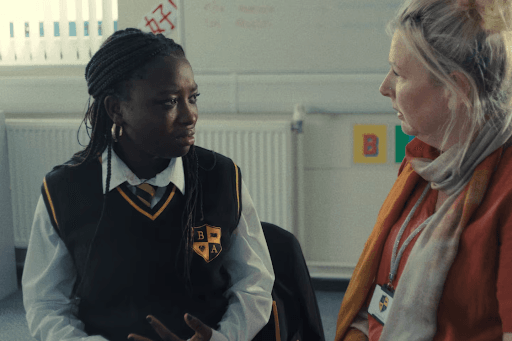
At the same time, the show refuses to portray its female characters as passive victims of these dynamics. The girls in Adolescence are perceptive, resilient, and painfully aware of the expectations placed upon them. They navigate standards that demand they remain small, quiet, and palatable, all while absorbing the constant threat of harassment, judgment, and violence. The series captures the exhausting labor this requires. Girls learn to interpret danger long before many adults realize anything is wrong. Girls and women learn to monitor tone, posture, clothing, online presence, and so, so much more, all while trying to appear effortless. For many young women, adolescence becomes a careful balancing act between visibility and safety.
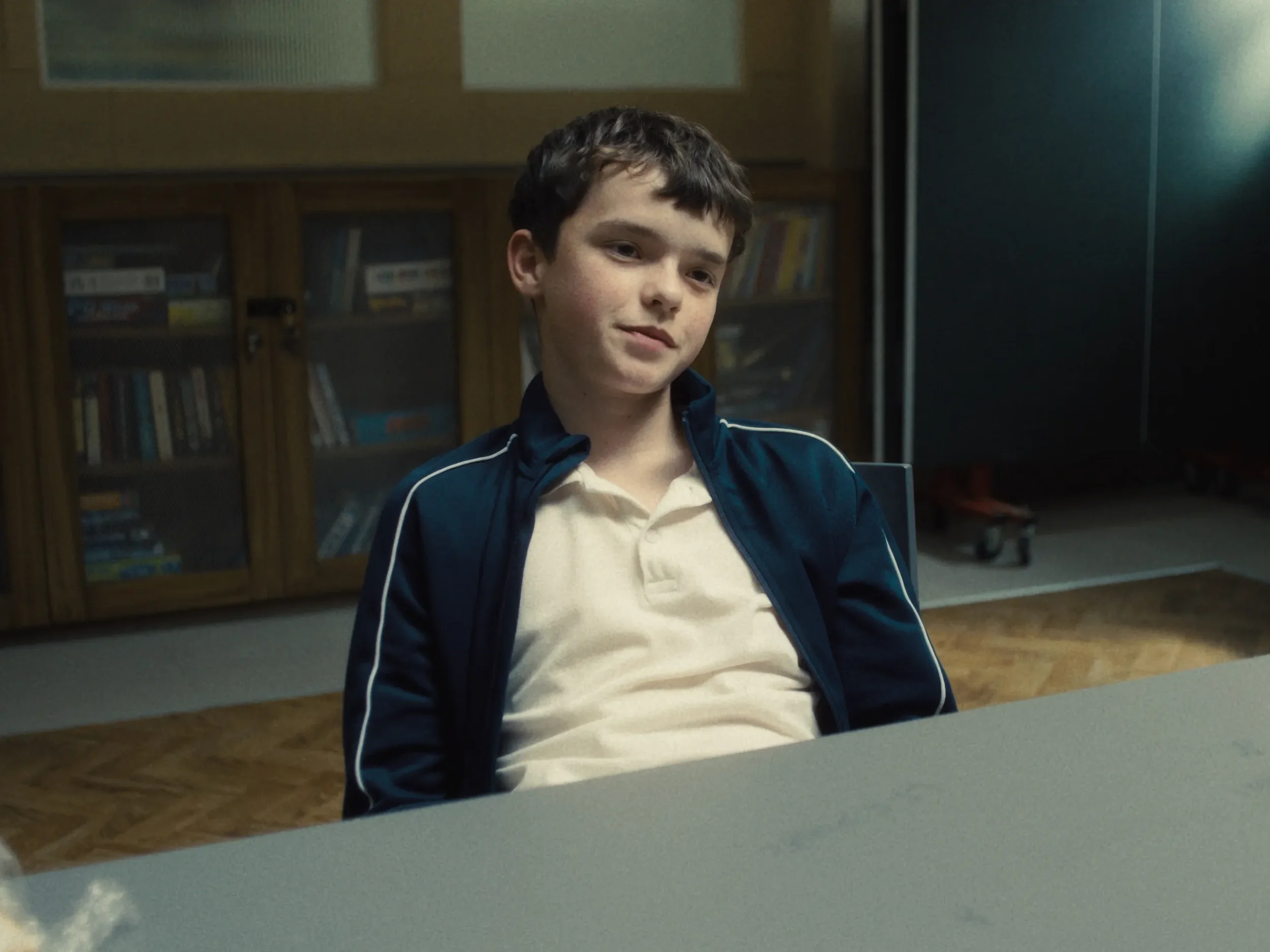
In contrast, the boys are often taught an incredibly different emotional language. Vulnerability is discouraged. Anger becomes the most socially acceptable expression of pain. When young men are not given safe spaces to process fear, rejection, loneliness, or confusion, those emotions do not disappear. They reemerge in distorted ways. The show does not excuse this behavior, but it does examine its roots with uncomfortable honesty. Many of the boys in Adolescence are not monsters. They are teenagers trying to understand a world that offers them contradictory messages about masculinity, power, and worth. The tragedy lies in how easily those messages can harden into ideology when empathy is replaced by resentment.
We potatoes profoundly appreciate what this show is shedding light on, but we also found it to be an incredibly difficult watch. One of us potatoes has a great deal of first-hand experience with misogyny, and it was a struggle for us to maintain compassion, throughout the series, for Jamie and for his father. We usually do not struggle to feel compassion. Quite the opposite. But the lack of awareness from his parents, his father’s emotional neglect and anger, the way Jamie deflects blame and lies, and the way he speaks to and about girls and women… it is dark, disturbing, and deeply familiar. It points to an insidious truth. The undercurrent of violence has always been here. The misogyny has always been here. It has always been playing in the background. The difference now is the scale. The reach. These men and boys now have a broad, loud platform.

When we potatoes were younger, we dealt with a lot of horrific, violent, and inappropriate behavior from boys and men. What makes the manosphere, red pill content, and similar ideologies so especially horrifying is not that the ideas are new. They are not. They are not revolutionary, nor are they intelligent. What is new is how efficiently they are packaged, amplified, and delivered to young audiences. To boys and young men, these messages are often framed as revelation. As truth. As empowerment. We potatoes found ourselves disgusted, heartbroken, enraged, and extremely disappointed by how many boys and men are still being pulled in this direction.
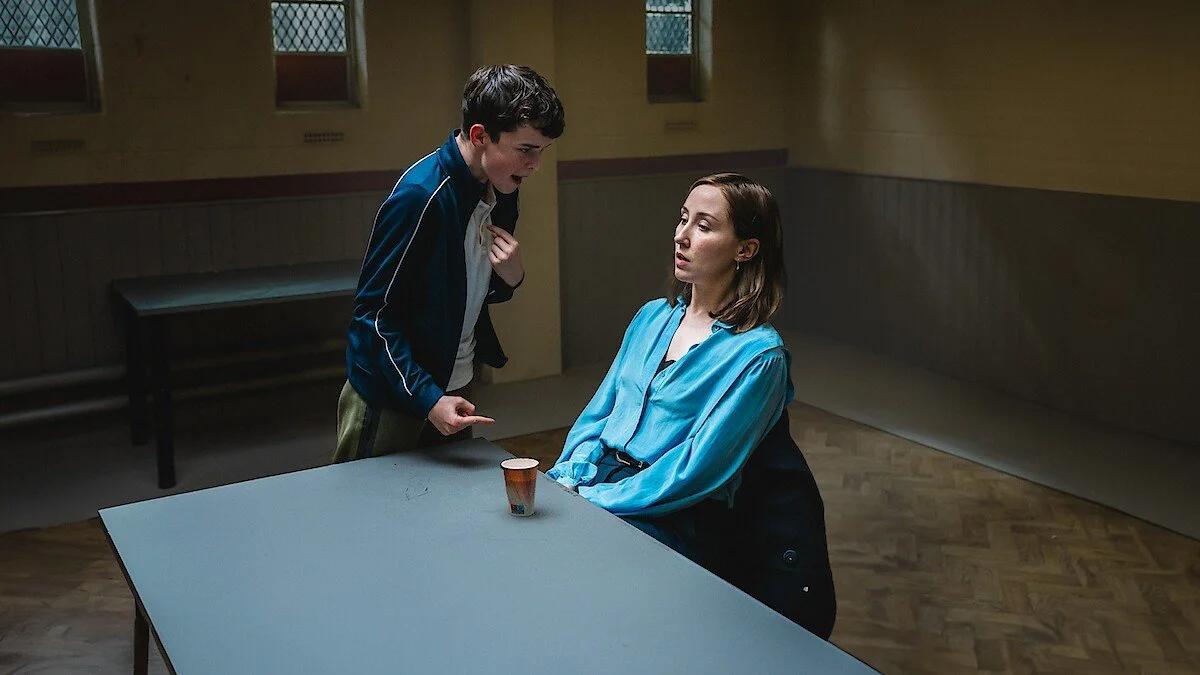
And this is where the conversation becomes more necessary. Understanding how boys are shaped by these environments does not excuse the harm they cause. If anything, it makes the responsibility clearer. These patterns are not accidental. They are learned, reinforced, and left unchallenged. Boys are not born knowing how to process rejection, insecurity, fear, anger, sadness, or loneliness. Those are skills. And far too many are not being taught them. Instead, they are handed narratives that frame empathy as weakness, control as strength, and entitlement as something they are owed. Without intervention, without emotional education, without accountability, those beliefs do not simply fade. They calcify.
We know we potatoes say this often, but THERAPY. Therapy, emotional work, and community accountability are not optional. Not when it comes to something this serious. They are necessary. Not just for healing after harm is done, but for PREVENTINGit in the first place. Boys and young men need spaces where they can learn to sit with discomfort without turning it into anger, to process rejection without turning it into resentment, and to understand that connection is not something they are owed. It is something built through care, respect, and mutual humanity.
We potatoes also have to point out that it is important to name the larger system at work. Patriarchy. These patterns do not exist in a vacuum. Patriarchal structures have long rewarded dominance, control, and entitlement while punishing empathy, vulnerability, and emotional awareness in boys and men. That imbalance does not only harm women and girls. It distorts the emotional development of boys as well. When boys are taught, directly or indirectly, that their worth is tied to conquest, control, or validation from women, they are being set up for failure. Because no person is ever something to be earned, won, or possessed.
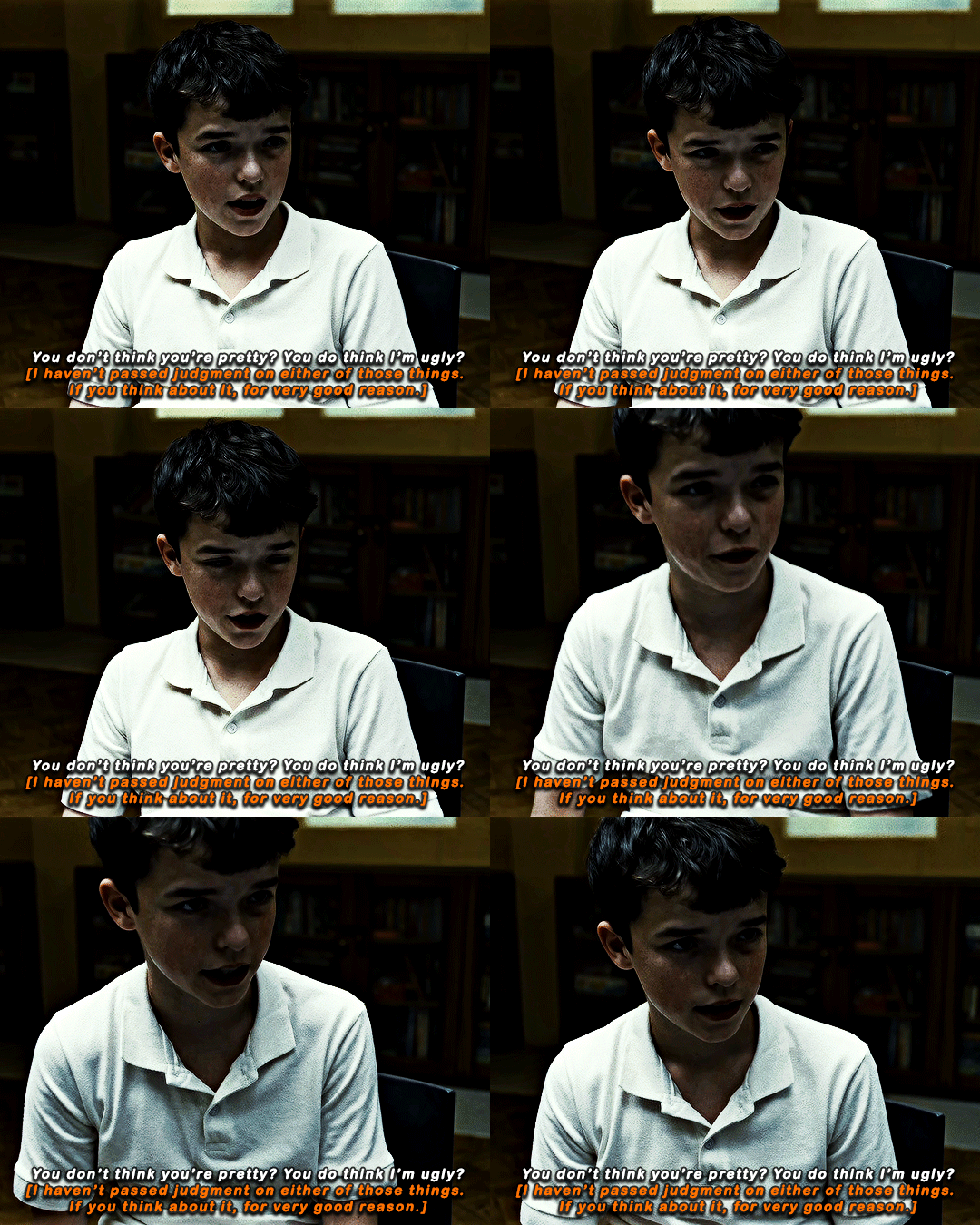
We potatoes want to be very clear. No boy or man is EVER entitled to a woman or a girl. Not her attention. Not her body. Not her time. Not her labor. Not her affection.Human beings are not rewards.They are not status symbols. They are not solutions to loneliness or insecurity. And dehumanizing women and girls does not make them less human simply because it is more convenient to believe so.
Adolescence forces us to confront how these beliefs are formed and reinforced, not just through individual behavior, but through cultural messaging, online spaces, and systems that quietly validate them. If we want to prevent harm, we have to be willing to challenge those systems directly. That means teaching boys emotional literacy, accountability, and respect early on. It means creating spaces where they can process difficult feelings without turning them outward as harm. And it means refusing to normalize entitlement to people.
It is also worth acknowledging how capitalism intersects with and amplifies these dynamics. The manosphere does not exist in isolation. It is monetized, incentivized, and actively promoted. Content that provokes anger, resentment, and division is profitable, and platforms reward it accordingly. Influencers who push misogynistic narratives are not just expressing harmful beliefs. They are building brands, selling products, and cultivating audiences that translate directly into money and influence.

These men are grifters. Con men. They are part of an ecosystem that profits from insecurity while deepening it. Capitalism does not prioritize ethics, morals, care, or collective well-being. It prioritizes profit. And when harm is profitable, it is rarely discouraged. If anything, it is amplified. This does not remove individual responsibility, but it does make clear that these ideas are not spreading naturally. They are being packaged, sold, and reinforced in ways that make them harder to escape.
Visually, the series leans into realism rather than spectacle. The entire show unfolds in what appears to be a single continuous shot. The camera does not cut away. It does not offer distance or relief. Instead, it moves with the actors, forcing us to remain present for every second of it. It is an incredibly difficult technique to execute, requiring precise choreography, timing, and performance from everyone involved. And yet, the series pulls it off seamlessly!

The result is deeply immersive and profoundly unsettling. There is no escape from the moment. No opportunity to look away or reset. The camera lingers on quiet interactions rather than dramatic confrontations. Conversations unfold in classrooms, bedrooms, and sidewalks rather than stylized cinematic spaces. This grounded approach reinforces the series’ central message: these dynamics are not rare or exceptional. They are happening in ordinary places every day.
We potatoes found this series intensely triggering and challenging, but we also found ourselves sitting with many of these scenes long after the episodes ended. The awkward silences. The uneasy recognition of language that once seemed harmless but now carries heavier meaning. The moments when adults begin to understand how much of their children’s lives exist beyond their sight. Adolescence is not interested in offering simple solutions. Instead, it asks us to confront the ecosystems that allow these ideas to flourish. Misogyny does not appear spontaneously. It is cultivated through patriarchal systems, capitalist incentives, mythology, generational trauma, and a profound lack of emotional education.
In recent years, we have watched authoritarian movements attempt to reinforce rigid gender hierarchies under the banner of tradition. Women are encouraged to shrink themselves physically and socially. Thinness becomes a moral virtue. Assertiveness is framed as aggression. Bodily autonomy is treated as negotiable. Rights are stripped away piece by piece. These ideas are not new, and in many ways they never left, but they are now being aggressively and violently revived. Adolescence examines how those broader political currents filter down into the everyday lives of teenagers. Young people absorb these messages long before they have the tools to critically examine them. The series suggests that confronting misogyny requires more than condemning individual behavior. It requires examining the systems that quietly teach it.
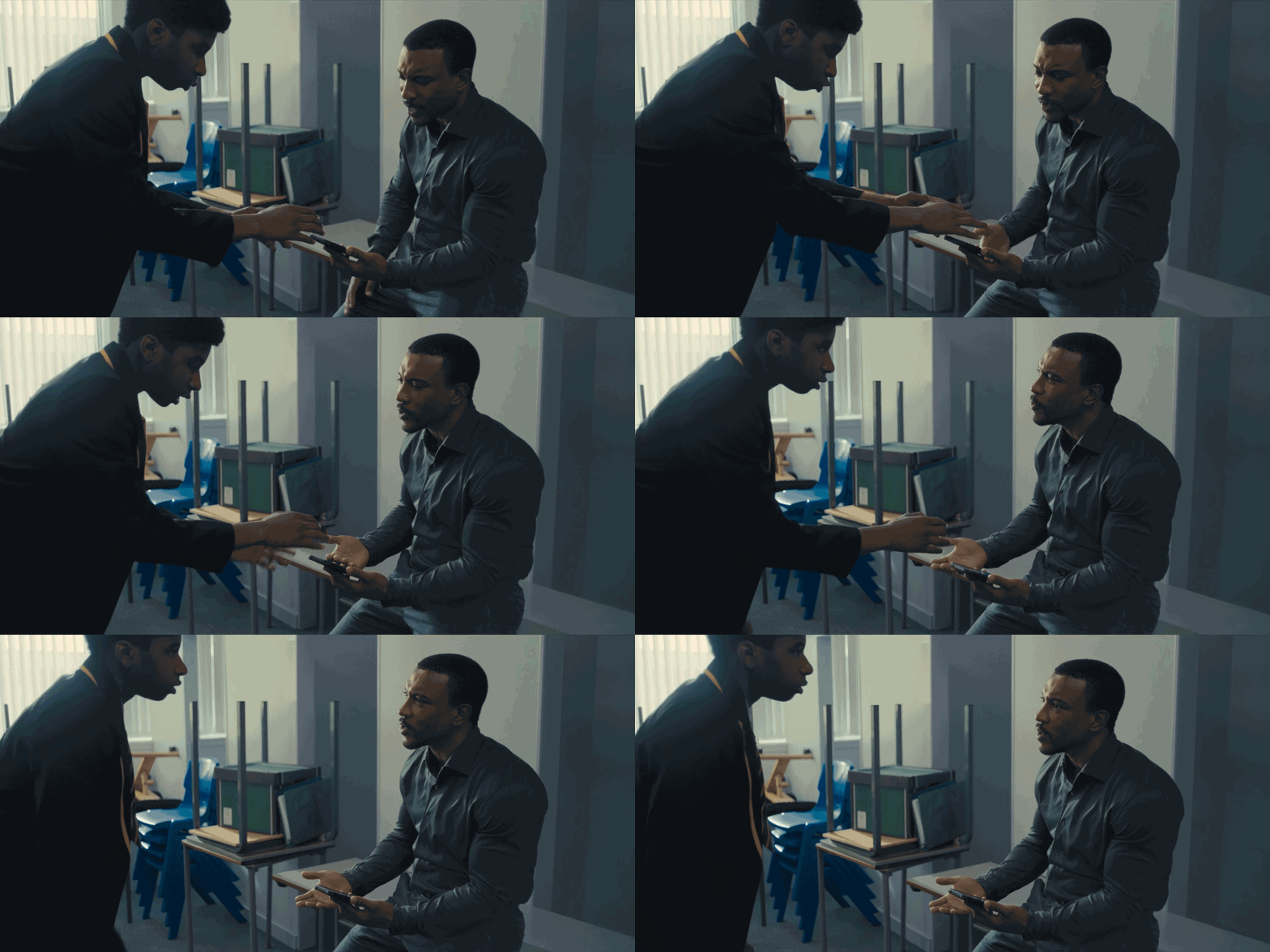
Despite the heaviness of these themes, the show never fully abandons the possibility of growth. Moments of empathy appear where they are least expected. Characters begin to question the narratives they have been handed. These shifts are rarely dramatic. They are small, fragile, and incomplete.
But they matter.
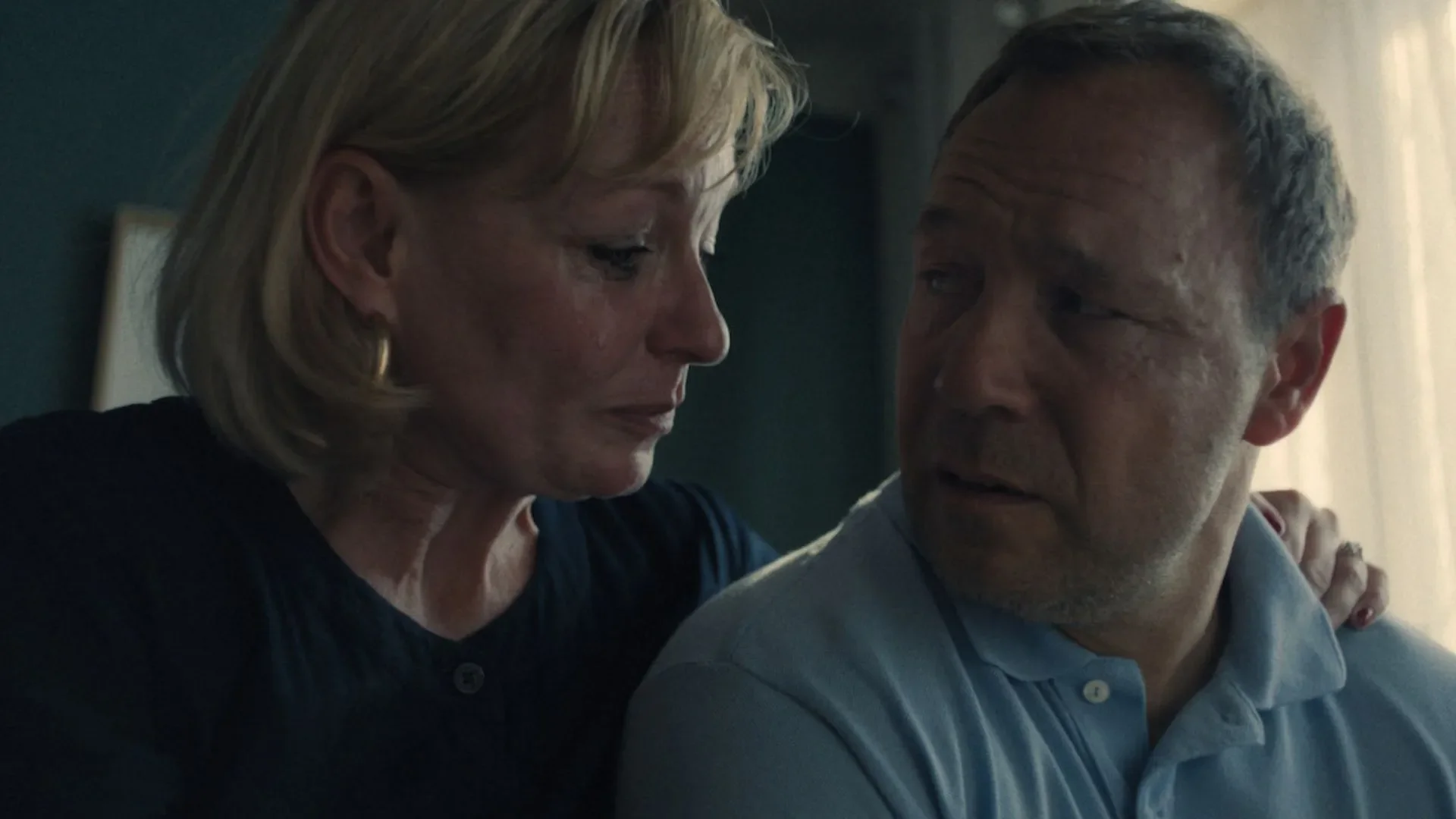
If Adolescence has a central message, it may be this: the stories we tell about gender, power, and identity shape the emotional worlds of young people long before they recognize their influence. Changing those stories requires patience, honesty, and a willingness to confront uncomfortable truths.
The acting in Adolescence is truly exceptional! The series leans heavily on subtle, emotionally grounded acting, and the cast delivers with remarkable restraint and precision. We potatoes were particularly struck by Owen Cooper as Jamie! It would have been very easy for this role to slip into something exaggerated or one-dimensional, but instead, the performance feels unsettlingly real. The deflection, the discomfort, the moments where vulnerability almost surfaces before being shut down… it is all handled with a level of nuance that makes the character far more disturbing. Not because he is overplayed, but because he feels so recognizable. We potatoes recognize him, have known a lot of men, young and old like him, and that authenticity gives the series much of its emotional weight.
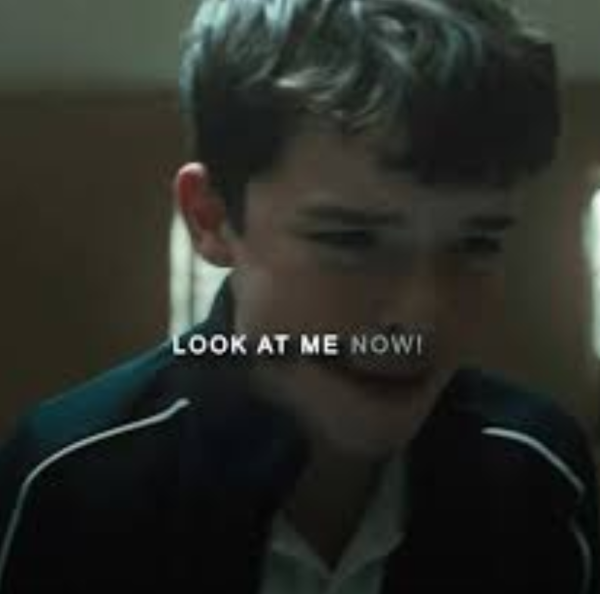
We potatoes do not have many critiques for Adolescence. It is a thoughtful, deliberate, and carefully constructed series. However, we did find ourselves wishing the show had spent more time exploring accountability, particularly in regard to Jamie. We would have liked to see what it looks like when these behaviors are confronted more directly. We understand why the series chooses not to go there. In many cases, boys and men who engage in this kind of behavior deflect, minimize, and do everything they can to avoid responsibility. That reality is, in many ways, part of what the show is examining. Still, we found ourselves wanting to see that confrontation more fully realized. Not for the sake of punishment, but for the sake of clarity. For his victim, Katie… and for the sake of naming harm and acknowledging it without deflection.

So is Adolescence an easy watch? Honestly, not particularly. The series is thoughtful, unsettling, and incredibly emotionally heavy. It demands reflection rather than passive consumption. We potatoes typically love shows like this, and while we did greatly enjoy the show… we also found it deeply disturbing and a bit enraging. We cried the first time through, and have cried some more since.
But, to be clear, we potatoes do love this show and highly recommend it! It is 100% worth it. Is it perfect? No series is. As we mentioned before, at times, certain story-lines feel as though they could have benefited from a little more time to develop fully. Some character arcs resolve more quickly than their emotional weight might warrant. Especially Jade, (Fatima Bojang), we potatoes would have liked to have seen more of her story. But these are small matters in a series attempting to grapple with issues of enormous complexity.

Adolescence lands at a moment when conversations about gender, power, and online radicalization are becoming increasingly urgent. By focusing on the emotional realities of young people navigating these pressures, the series offers a sobering reminder that cultural change begins long before adulthood.
We potatoes believe stories like this matter. Not because they provide definitive answers, but because they encourage reflection and introspection. They invite us to examine the messages our culture sends to young people about empathy, strength, and belonging.
If you choose to watch Adolescence, please do so softly. Give yourself time to sit with what the series raises. Pay attention to the quiet moments, the subtle shifts in perspective, and the uncomfortable questions that linger after each episode ends.
Stories that challenge us are rarely easy. But they are always deeply valuable.
Cheers to conversations that refuse to be silenced. Cheers to raising young people who value empathy over dominance. Cheers to questioning the narratives that ask women to shrink themselves in order to be safe. And most importantly, cheers to you!
You deserve a world where your humanity is not negotiable.
We give this amazing show 5 out of 5 Sherry’s!
The Adolescence Drinking Game
Take a sip anytime:
Jamie yells or loses his temper
Jamie is aggressive or cruel
Jamie mentions or asks for his “dad”
Jamie claims he's innocent
Jamie lies
D.I. Bascombe eats an apple
Eddie yells or loses his temper
A character shows empathy or tries to understand
An adult clearly doesn’t know how to handle the situation
Someone avoids answering a question
There’s a long pause or uncomfortable silence
Someone deflects with humor or sarcasm
A quiet moment lingers or lets something sink in
Katie is mentioned (sip in her honor)
Manosphere or red pill content is mentioned
Anyone says "incel"
What did you think? Did you like the movie? Did you hate it? What movies should we watch? Any and all thoughts are welcome! Let us know here in the comments and always remember to be safe and drink responsibly!
What do you think? Do you like this drinking game? Are there rules missing? Is the game too intense? Are there movies that you think we should make a drinking game for? Let us know here in the comments and always remember to be safe and drink responsibly! (Drinks can be water, soda, anything nonalcoholic, etc. Please be safe, have fun and take care of you!)