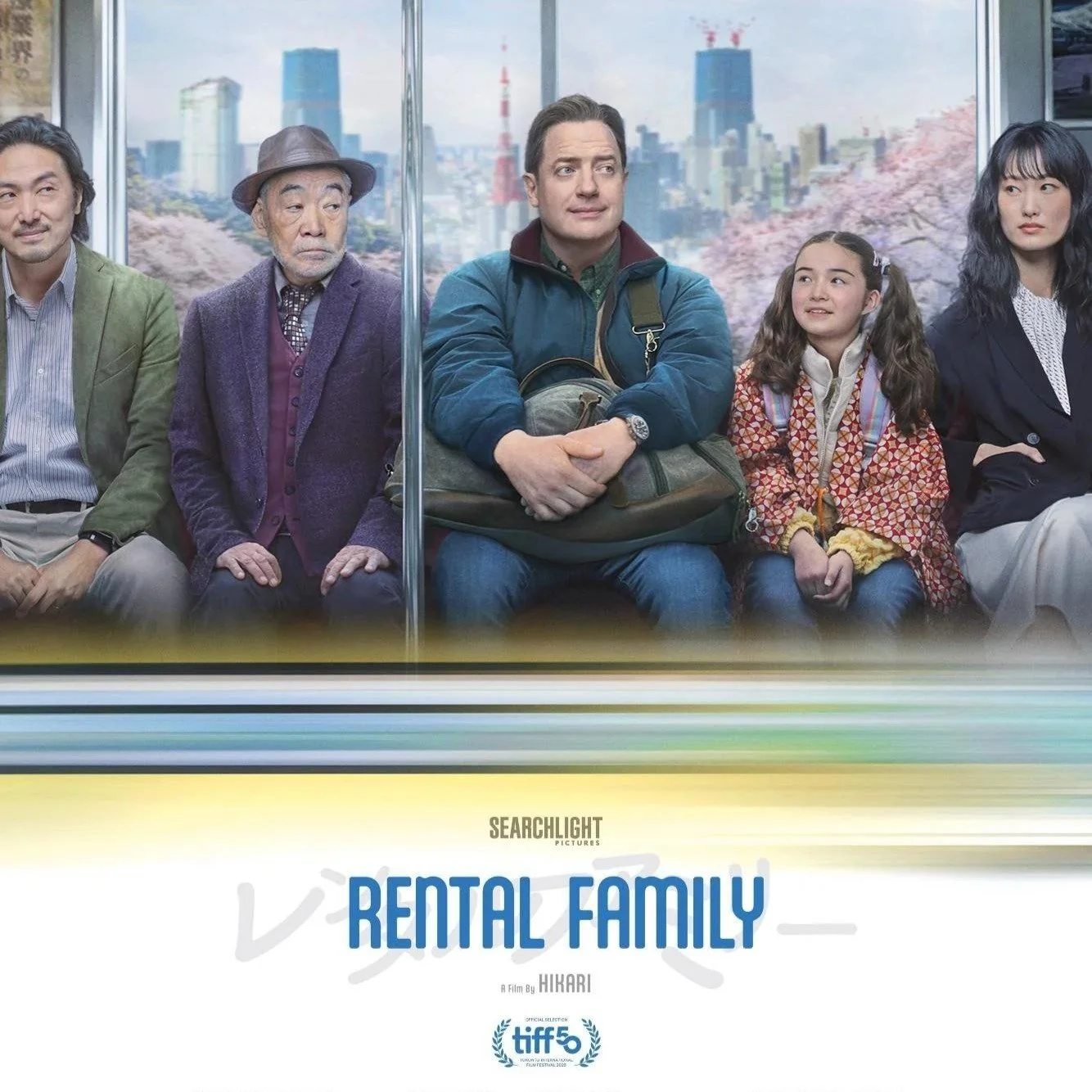
Some stories feel eerily timed. This is one of them. This week, in what we potatoes have declared Mental Health March, we are sitting with Rental Family, a film that asks questions that feel increasingly urgent in a world unraveling into deeper chaos. As fascism tightens its grip, as control and manipulation become normalized at institutional levels, many of us are feeling destabilized in ways that are difficult to articulate. We are collectively being traumatized. We are more divided than ever. And in the midst of that, this movie asks something deceptively simple yet profoundly destabilizing: what does it mean to take care of each other? What does it mean to be a family?
Before we begin, a gentle note. Rental Family explores family, loneliness, emotional neglect, economic instability, performative relationships, grief, and unmet needs. It handles these themes with care, but they may hit close to home. They did for us. Please take care of yourselves while watching and while reading.
As always, we will try to avoid major spoilers, but some elements of the story will be discussed. Please read with care.
There is much to unpack here, so let’s begin!

We open on the beautiful and bustling city of Tokyo, Japan. Our main character Phillip Vanderploeg (Brendan Fraser) is racing to get to an early morning audition. He manages to make it but only by the skin of his teeth!
Phillip is a struggling American actor living in Japan. He appears in a few commercials and occasional television roles, but his career has never really taken off. He does his best to keep his hopes up, but struggling to find consistent work is difficult and disheartening. Particularly in our patriarchal and capitalist system. But we digress!

A call from his agent wakes him up, he has a role! The role… “Sad American.” Once again he finds himself racing against the clock to try to make it to the location on time. This time though… he is late.
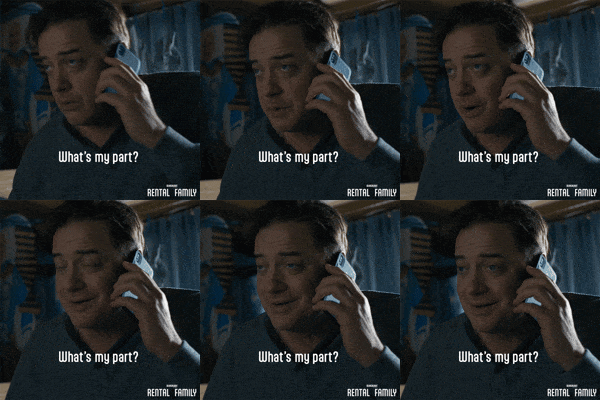
Not a great look, but juggling public transportation can be complicated at times. He steps into the room in a somber black suit carrying a brief case to discover that the role of “Sad American” means that he is attending what appears to be a funeral!
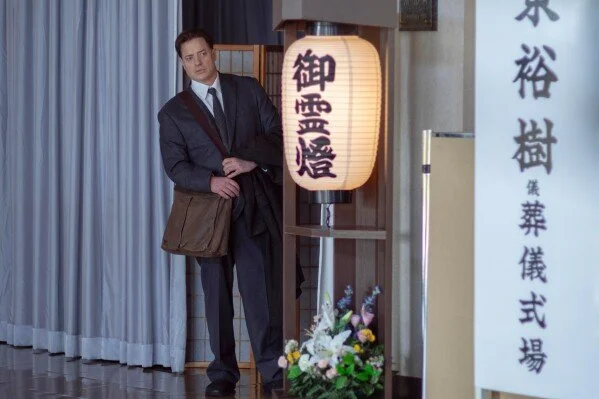
Surprised, but doing his best to be polite, he tries to find his seat discreetly. Unfortunately for him, he sticks out like a sore thumb. Finally finding his seat, he listens with confusion to a young woman, Aiko Nakajima (Mari Yamamoto), give a eulogy, when to his shock the man in the casket lifts his head! “The fuck?” Slips out of Phillips mouth louder than he probably intended, but we potatoes have to admit we were startled ourselves!
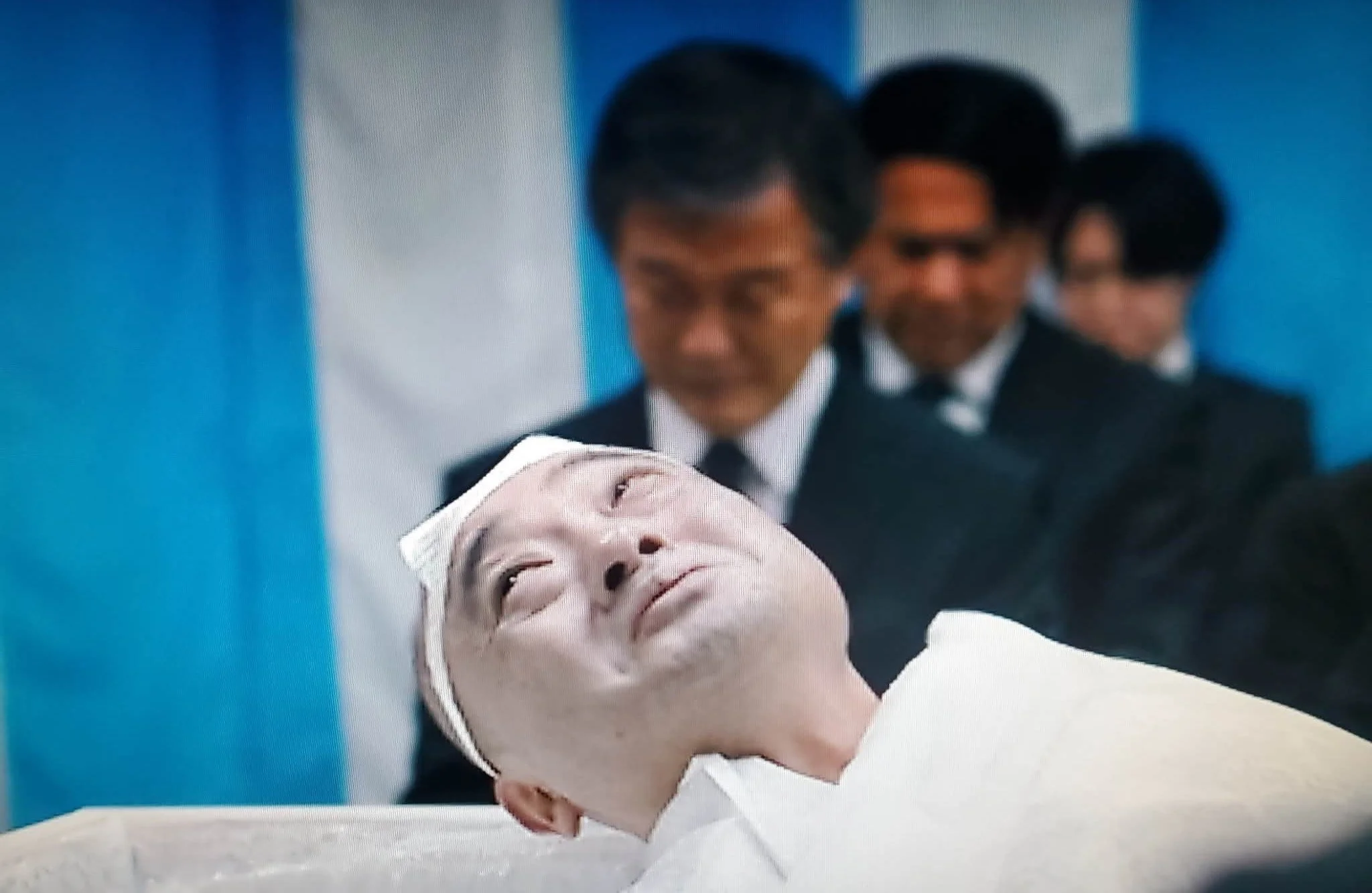
The woman giving the eulogy, Aiko, glares at Phillip briefly before continuing the speech. Phillip is confused, a bit disturbed, and not sure what do. He remains seated and does his best to go with it.
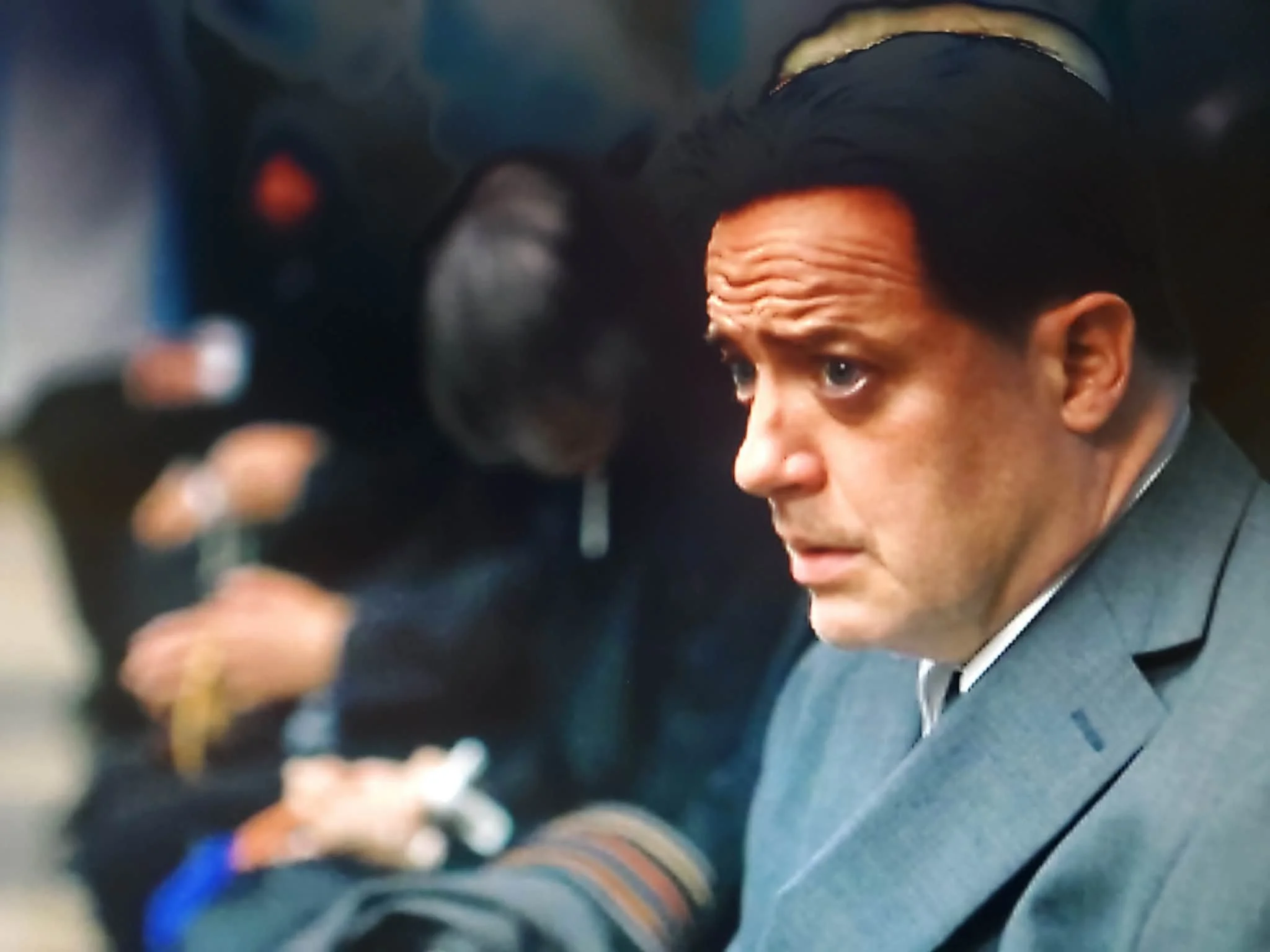
After Aiko is done, the man in the coffin Mr. Daito (Shohei Uno), lays his head back down into the coffin and closes his eyes.
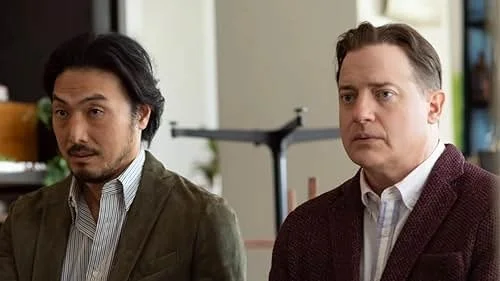
Shinji Tada (Takehiro Hira), steps up to the microphone and wraps up the event. “Everyone, please come forward.” A metal bowl is rung, and everyone is stepping forward to bow to the casket and say their goodbyes.
Phillip reaches the casket, and looks in to find Mr. Daito smiling. Phillip’s confusion is still clear on his face as he does his best to be respectful but is unsure how to proceed.
With the funeral over, Mr. Daito is no longer in the casket and is standing before Shinji Tada bowing. “To even have prepared this outfit for me. Thank you so much! I have never felt this way before… How can I put it? I finally feel like I deserve to exist. Thank you so much!”
Tada responds, “It is a pleasure to be of service.” Bowing in return.
Phillip is still struggling to understand what precisely he was just a part of, but he goes back into the room where the funeral was held. He looks into the now empty casket, and decides to get in! He is a tall man, but he manages to fit inside. We potatoes believe that this is Philips way of trying to understand what Mr. Daito meant, and what the purpose of the event was.
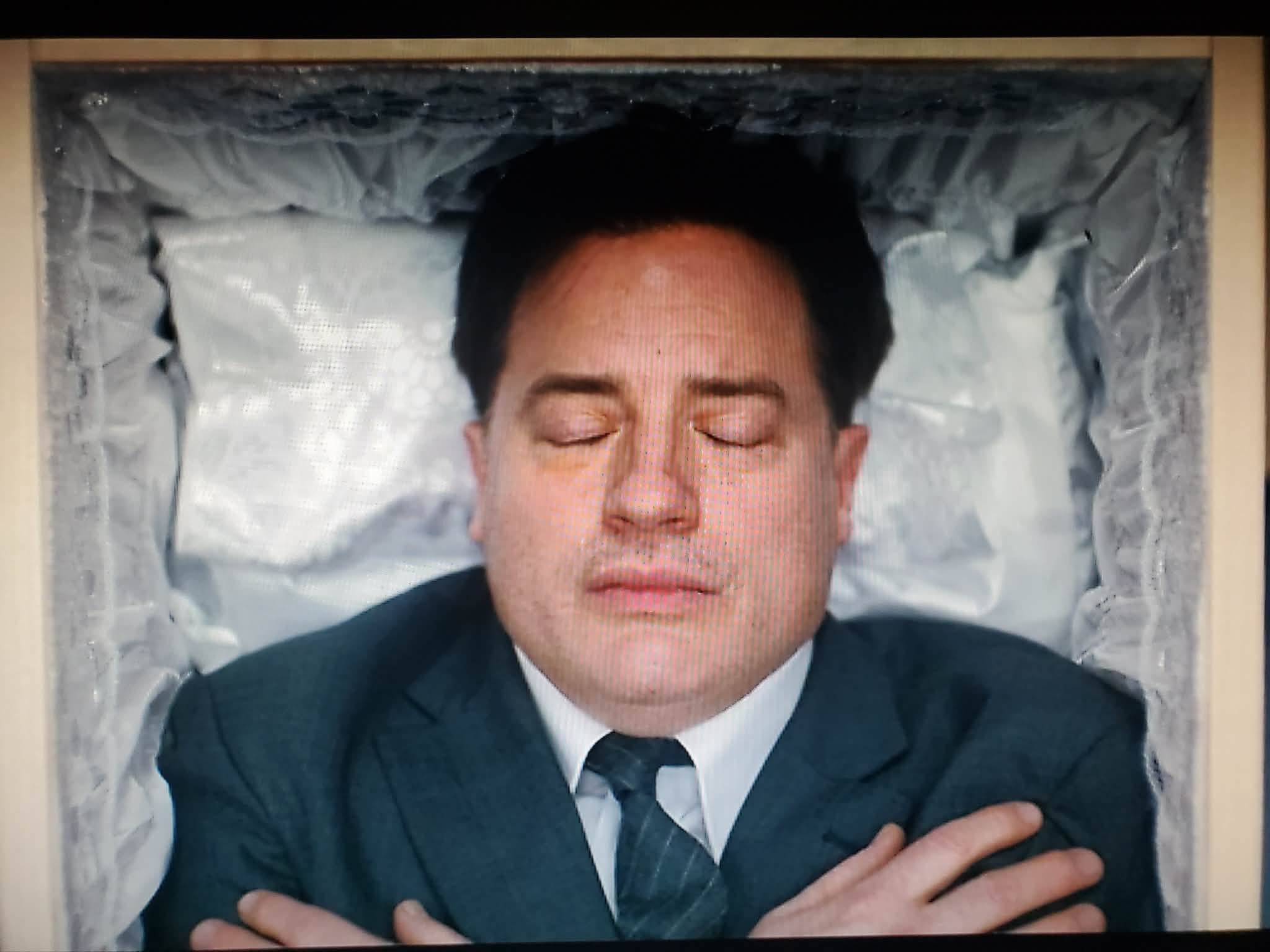
Tada catches him! “You know we cremate bodies in Japan?” He is unamused. Phillip awkwardly sits up, “Guess that means no zombies.”
“Nope. But I’ll have to dock your pay for being late and disrupting service.”
They need to leave as a real funeral is going to need the parlor and casket soon. Phillip follows him out. “Excuse me! Was the whole thing fake?”

Tada humors him, “Nothing about that was fake. Especially to Mr. Daito. The man in the box.”
Phillip is still confused, “Well, what would you call it then?”
“A ‘Specialized Performance’”.
They briefly discuss how long Phillip has been in Japan, and Tada decides to invite him to come by their office sometime. “I might be able to use you for something more than sad American.” He hands Phillip a business card. Phillip accepts the card, and takes a closer look at it. Rental Family Inc.

He does not wait long to swing by their office. He is invited in, and takes a seat. Tada is pleased to see him, “I knew you would come.” Tada takes a seat across from Phillip and asks him, “So, what do you think we do?”
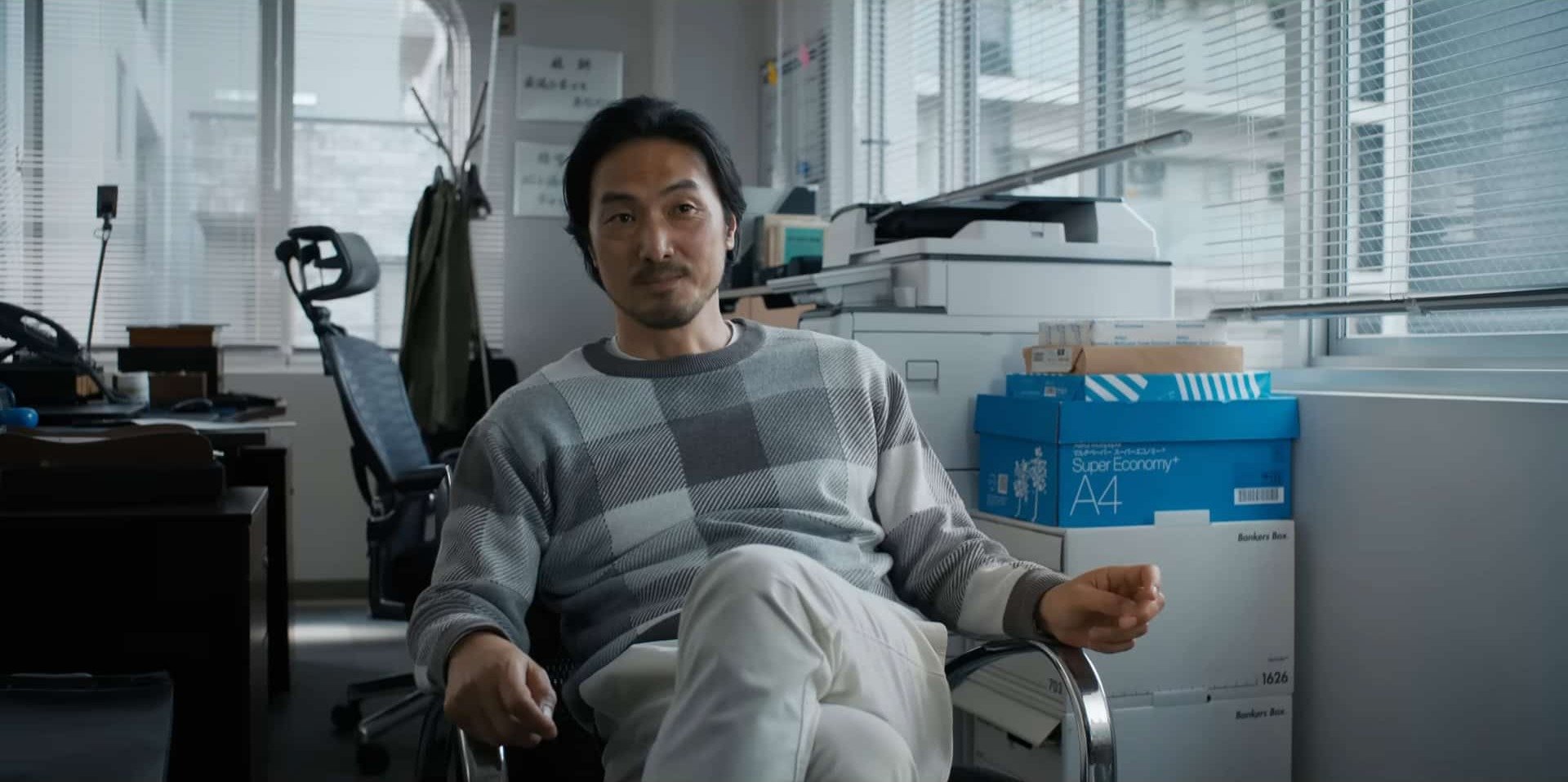
Phillip is unsure how to answer. He laughs awkwardly. Tada says, “We sell emotion.” We potatoes really like this line. Simple, yet true.
“How?”
“We play roles in our client’s lives.”
Phillip is still not getting it, so Shinji Tada walks him through it as best as he can. Phillip suggests therapy, but Tada points out that mental health is extremely stigmatized in Japan.
At this point, we potatoes want to pause for a moment, because this is one of the places where the film touches on something culturally complex. Mental health stigma is not unique to Japan, and we want to be very clear that we are not judging how people in other countries cope and deal with mental health, emotional pain or social pressure.
Every society develops different ways of navigating mental health, vulnerability, family problems, and public perception. In many ways, the United States struggles with many of the same issues, it is just expressed differently. What Rental Family does so thoughtfully is not criticize a culture, but illuminate how mental health, loneliness and isolation are dealt with differently in other countries. But we digress!
“What do you need me for?”
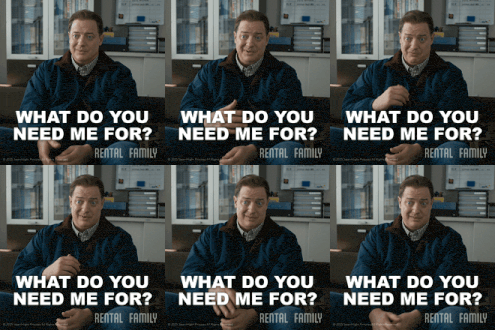
“We need a token white guy. It’s a niche market and I need someone to fill the role.”
Phillip hears him out, but he is not sold on it. He gets up to leave, and on the way out is reminded by Tada of one of the more popular commercials he has been in. Tada reminds him that he may not have a lot of options when it comes to work, and that maybe he should give this a try.
While it does feel somewhat manipulative, we potatoes can see his point and so does Phillip.
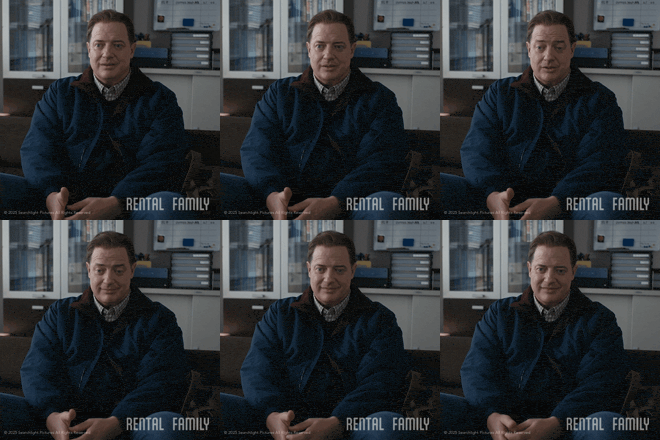
Wrapping up from here! Phillip does decide to work with them, and finds it far more difficult than he expected. The cultural differences, even despite him living in Japan for seven years, are difficult for him to adjust to. Thankfully he does, and while there are plenty of real critiques and concerns about this kind of work… it is also highly meaningful. Phillip really grows into the roles he plays, and learns a lot from his clients. We potatoes love this for him and really enjoyed watching his character grow!
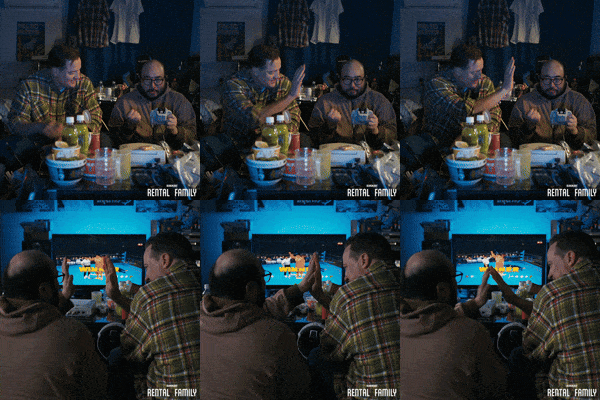
The premise sounds almost satirical at first glance. It is a service that allows individuals to rent family, friends, co-workers, etc. for special events, milestones, hospital visits, or simply to fill an empty space at the dinner table. A father for a graduation. A sister for a wedding. A son for a medical appointment. On the surface, it feels transactional, and almost absurd. But the movie refuses to mock the concept. Instead, it treats it as a reflection of something deeply broken within our modern world.
We are introduced to characters who are not melodramatic or exaggerated. They are exhausted. They are functioning. They are surviving. But they are profoundly alone. Their families are distant, fractured, emotionally unavailable, or no longer alive. Their support system has eroded for one reason or another while under economic pressure and cultural expectations. They have learned to perform stability in a world that rewards composure and punishes vulnerability.
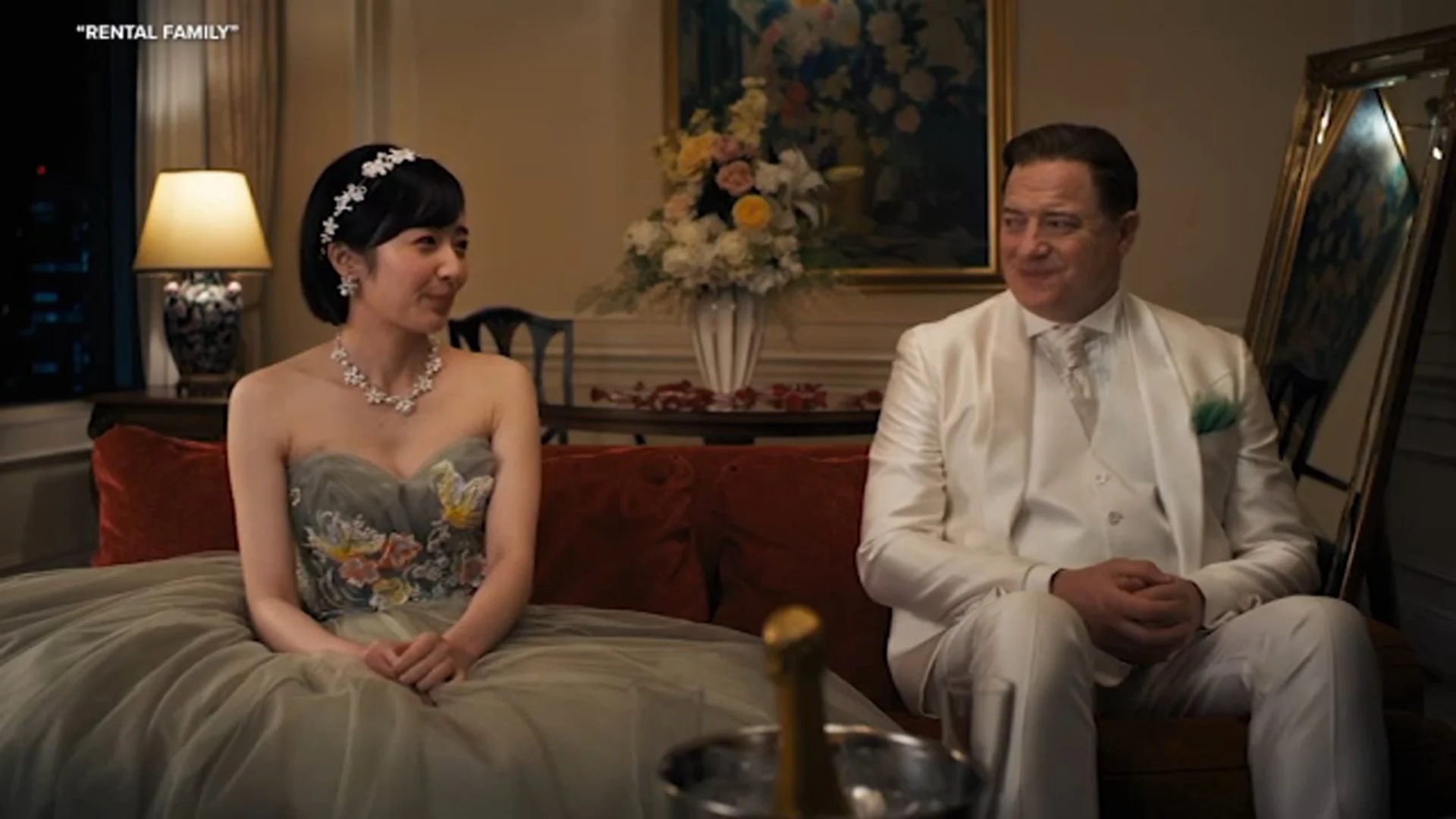
Into that fragile equilibrium steps the rented family.
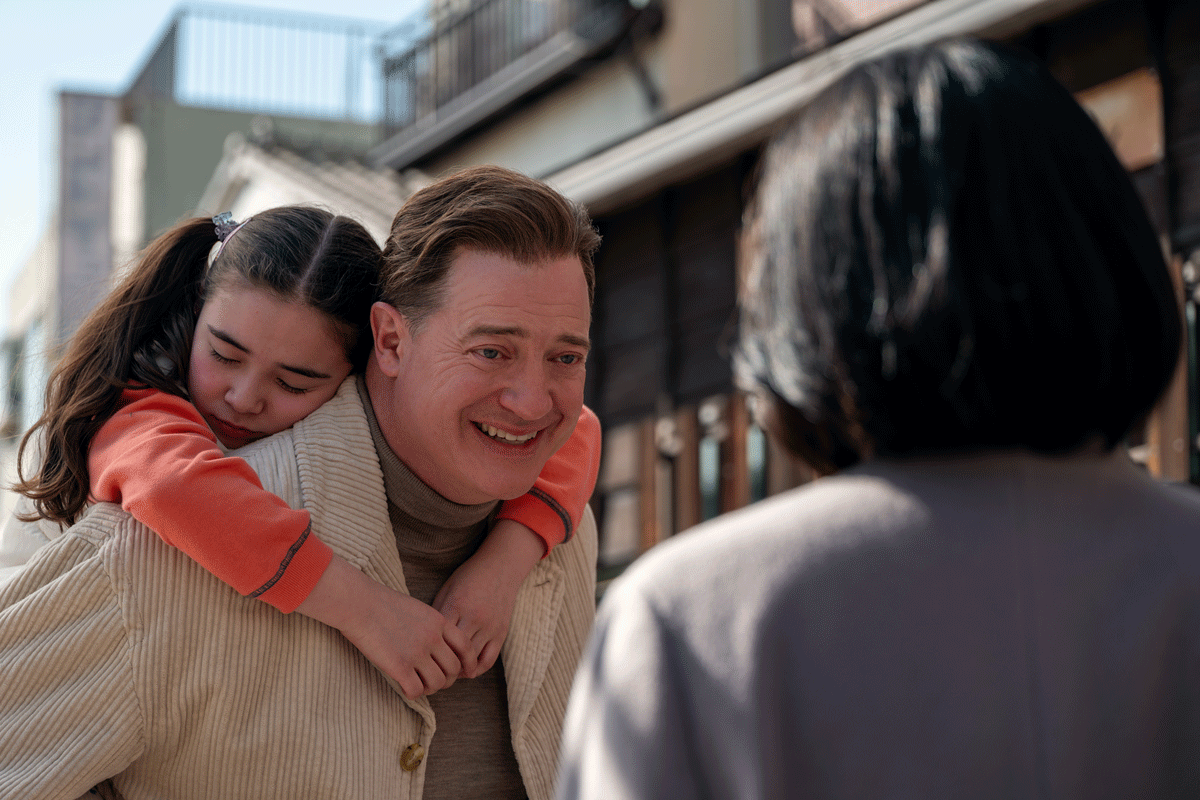
However, the film does not want to make this entirely comfortable. One of the roles Phillip is asked to play, is a particularly difficult one. He is asked to be a rental father to a little girl, Mia Kawasaki (Shannon Mahina Gorman). Sounds innocent enough right? Except, she is not allowed to know that he is a paid actor. So, Phillip has to play the role of father and she has to believe that he is her actual father!
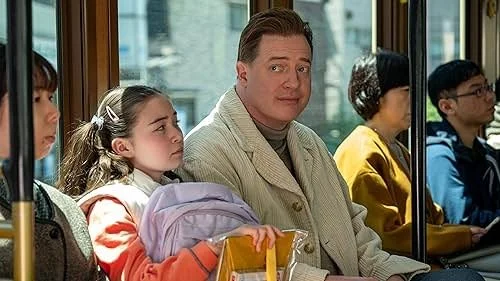
This presents a bit of a conundrum for Phillip… is it ethical to lie to a child? What happens when he is no longer needed? Will she just go through life thinking he is her father? Is that truly OK?
It is complicated. Her mother has her reasons, and we will not get into them here so as to not give away too much of the film. The reasons would seem a bit strange to those of us from the west, but they are not invalid just because it is odd to us. While we do not approve of lying like this to children, we really feel for everyone in this situation.
We feel deeply for Mia who just wants to know her father. We feel for her mother, and the constraints she is under. And Phillip, oh Phillip… what an awkward position to be put in.
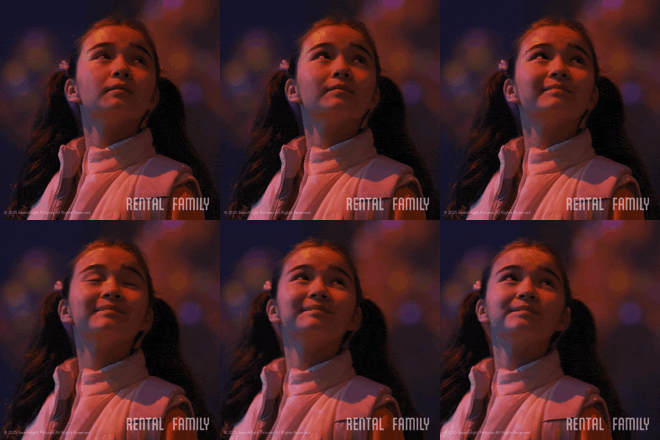
But he becomes the rented father who listens carefully, and helps Mia grow. And Mia gives Phillip the opportunity to know her which in turn helps him grow as well.
Phillip learns that the Rental Family can bring a lot of joy. The rented friend who encourages. The rented daughter who remembers small details. The rented grandmother who holds space. These are gestures that are simple, but not insignificant. And the film presses on an uncomfortable question: if the care feels real, does the payment invalidate it?
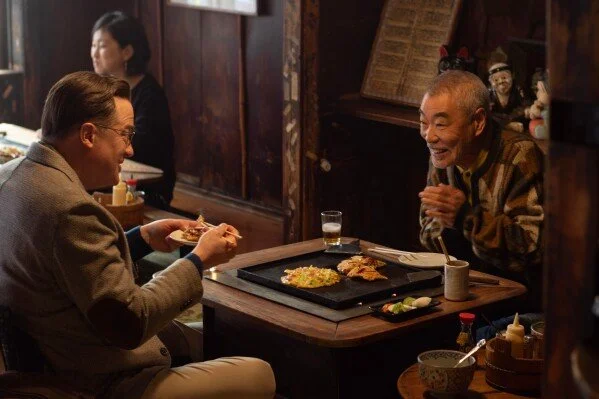
Rental Family becomes most powerful when it shifts the focus away from the transaction and toward the behavior itself. Love, is not merely a feeling. It is a practice. It is consistency. It is support.
In a time when many of us are confronting authoritarian dynamics both politically and personally, this idea feels far-reaching. We potatoes are deeply familiar with systems where loyalty is demanded, where obedience is framed as love, where silence, masking and performance is mistaken for peace. Rental Family softly challenges those assumptions. It asks whether family must be defined by blood alone, or whether it can be defined by consistency, accountability, and mutual care.
The film does not romanticize found family. It does not suggest that rented relationships automatically become authentic or permanent. Boundaries are present. As we have already discussed, awkwardness exists. Some arrangements remain professional, but within those dynamics something begins to shift. Performance becomes rehearsal. Rehearsal becomes practice. Practice becomes habit.
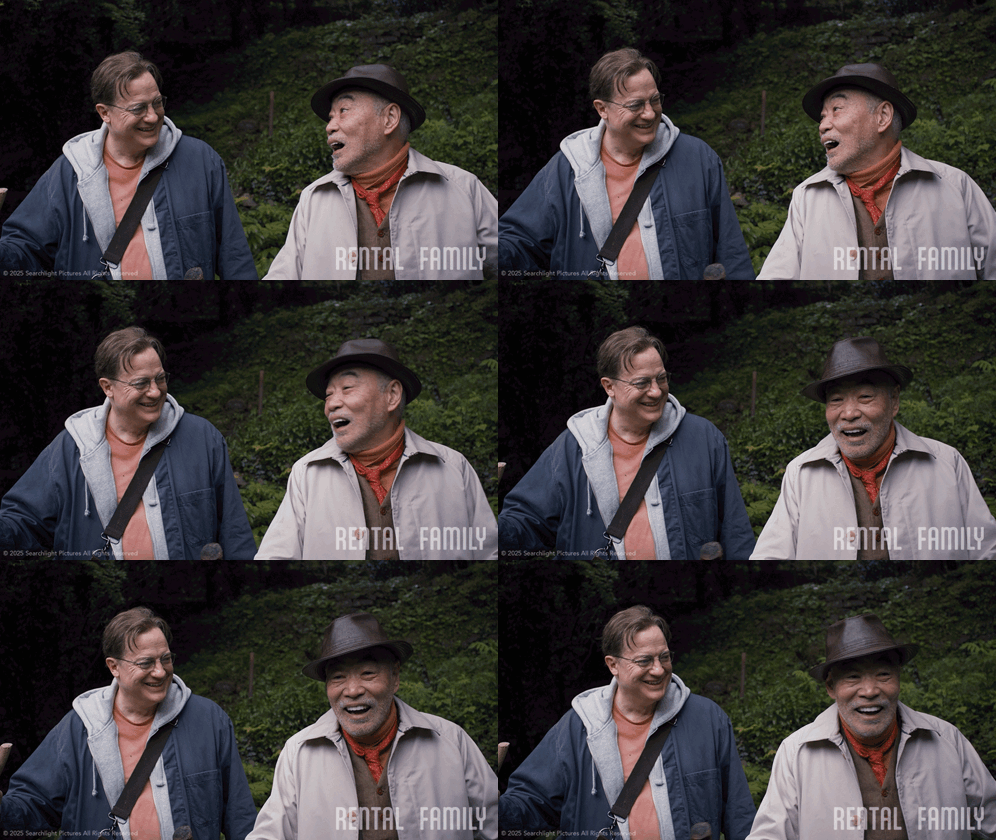
What if modeling support teaches someone how to give it? What if repeated acts of patience create genuine patience? What if chosen bonds offer safety where inherited ones did not?
These are not abstract questions. Many of us are navigating burnout, instability, and the psychological toll of living under systems that demand productivity while offering little, to no safety. We are told to be resilient. We are told to endure. We are told that exhaustion is personal weakness rather than systemic design.

We feel that Rental Family pushes back on that narrative. Its characters are not struggling because they are fragile. They are straining because they are unsupported. The film mirrors the quiet depletion many of us feel. It acknowledges that loneliness is not a moral failure. That needing support is not shameful. That seeking connection, even in unconventional ways, can be an act of survival.
The film also probes the idea that family structures are inherently benevolent. We potatoes know firsthand that this is not always so. In authoritarian cultures, traditional family values are often elevated as unquestionable goods. Rental Family complicates that assumption. It suggests that family, when rooted in control rather than care, becomes harmful. And it gently proposes that intentional connection may offer something more stable than obligation.
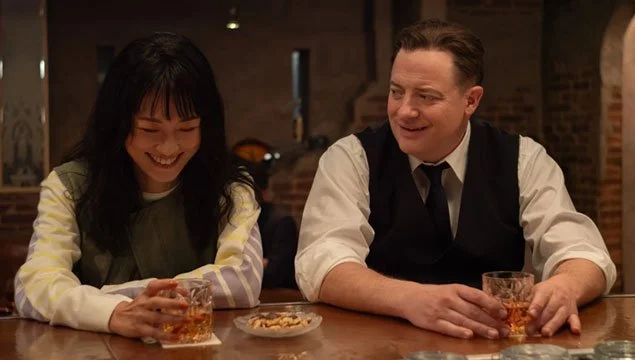
And obligation is not love. We potatoes have had to deconstruct that belief ourselves. Obligation can maintain appearances. It can enforce loyalty, silence, and performance. But love cannot be commanded, and care cannot be sustained through pressure alone. When connection is built on obligation rather than love and genuine empathy, the structure of family may remain intact, but the humanity within it begins to erode.
Visually, we found Rental Family to be interesting! The film leans into intimacy rather than spectacle. The camera lingers. The lighting is warm but not sentimental. The pauses between lines of dialogue are allowed to breathe. There are no swelling emotional cues forcing the audience to react. Instead, there is restraint. And in that restraint, there is trust, and care.

We potatoes honestly do not have many critiques for this film. The acting is superb. The story is grounding and thoughtful. The way the film is shot feels intentional and meaningful. The film could have benefited from spending a little more time with some of the secondary characters and the clients Phillip works with. Several of those relationships are fascinating, and we found ourselves wishing the film had lingered with them just a bit longer. Their stories feel important, and a little more time exploring them would have deepened an already compelling narrative.
Still, we potatoes found ourselves sitting quietly with several scenes long after they ended. The discomfort of realizing what has been missing. The relief of being heard without interruption. The unfamiliar steadiness of someone showing up consistently. These are not dramatic revelations. They are subtle re-calibrations. And that subtlety is precisely what gives the film its weight.
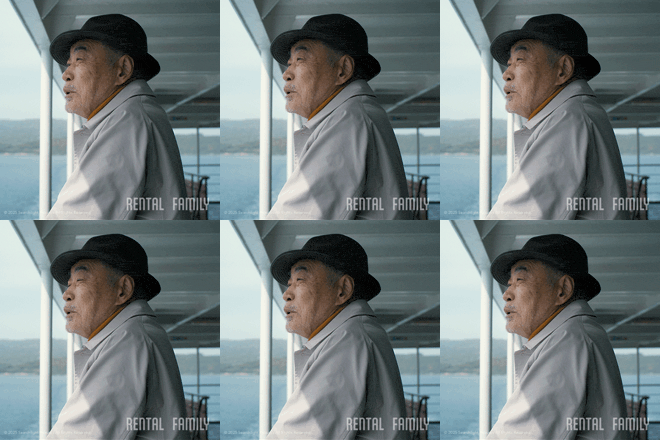
Rental Family gently proposes that there is healing in being seen and heard. We potatoes would agree with this ourselves. But, healing is rarely instantaneous, rarely neat, and rarely follows a single path. This movie explores how care and steady presence can help people rebuild patterns of connection when those patterns were never given safely in the first place. At the same time, it understands that healing is deeply personal, and that there is no “one way” that works for everyone.
In a time when institutions feel unstable and leadership thrives on chaos, this message feels especially important. We potatoes cannot stress this enough: Control is not care. Silence is not safety. Compliance is not connection. If we are to rebuild anything meaningful, we must look at how we treat ourselves, and how we treat one another, even in the smallest of ways.
So is Rental Family an easy watch? Not exactly. It is contemplative and deliberate. It asks the audience to reflect rather than react. And we potatoes love films like this!
Is it perfect? No film is. Is it timely? Absolutely.
Particularly now. Particularly when many of us are trying to remember what a healthy connection looks like, and feels like.
Now, Rental Family does not promise that chosen bonds will solve systemic collapse! It does not suggest that rented care replaces accountability within biological families. But, it does say that intentional support matters. That we are allowed to define family in ways that protect our mental health. That we can practice new patterns even when the old ones failed us.
And for many people right now, those old patterns are breaking in painful ways. Political extremism and fascism have torn through families across the country, even as the loudest voices claim to defend “family values.” We potatoes want to be clear. Choosing distance from people whose beliefs are rooted in cruelty, bigotry, mythology, and the denial of basic human rights and dignity is not betrayal. It is self-protection. Family should never require enduring harm.
We potatoes believe profoundly that choosing care over control is resistance. That building healthy, reciprocal connection is resistance. That protecting our mental health in a culture that profits from our exhaustion is resistance.
We highly recommend this film, but if you decide to watch Rental Family, do so gently. Sit with it. Let it unsettle and comfort you in equal measure. Enjoy the quiet contemplation, the introspection and the questions. We know we potatoes did.
So, cheers to Rental Family! Cheers to redefining family on our own terms! Cheers to practicing care, even when it feels awkward at first! Cheers to the slow, deliberate work of healing in fractured times! And most importantly, cheers to you!
You deserve connection that is steady. You deserve support that does not require obedience. You deserve a family that values your humanity and your rights. You deserve a family, however you build it that allows you to be fully yourself. A family that chooses you.
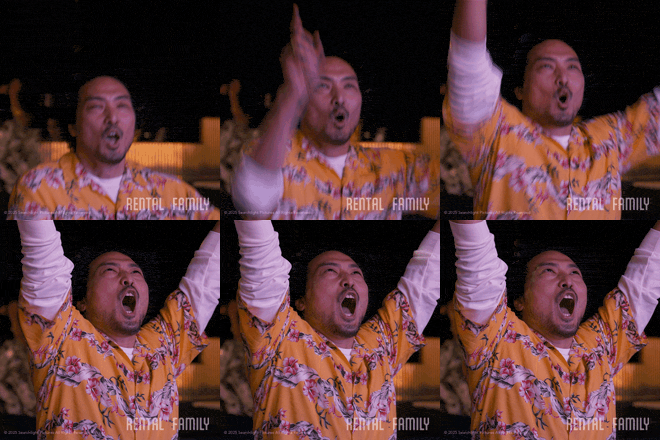
We give this 4 out of 5 beers!

The Rental Family Drinking Game
Take a sip anytime:
1. Phillip people watches
2. Phillip appears on a TV or a billboard
3. Phillip has a new client
4. Phillip looks confused or worried
5. Aiko looks annoyed
6. Tada smiles
7. You see anyone through a window
8. There's a train on screen
9. Awkward laughter
10. Anyone says "rental"
11. Anyone says "family"
What did you think? Did you like the movie? Did you hate it? What movies should we watch? Any and all thoughts are welcome! Let us know here in the comments and always remember to be safe and drink responsibly!
What do you think? Do you like this drinking game? Are there rules missing? Is the game too intense? Are there movies that you think we should make a drinking game for? Let us know here in the comments and always remember to be safe and drink responsibly! (Drinks can be water, soda, anything nonalcoholic, etc. Please be safe, have fun and take care of you!)