ParaNorman Review (2012) – A Hauntingly Heartfelt, Rotten-Roots Ghost Story About Fear, Blame, and Why the Weird Kids Might Be the Only Ones Who Can Save Us!

Spooky Season continues! And today we potatoes are shambling straight into one of the most emotional stop-motion films ever made: ParaNorman (2012). Don’t let the cute claymation fool you. This isn’t just a quirky Halloween romp with zombies and ghosts. This is a story about fear, grief, scapegoating, mob mentality, the persecution of people who are different, and what happens when a community decides it’s easier to destroy what it fears than understand it.
Before we go any deeper into this haunted little town, we want to gently pause. ParaNorman may be animated and delightfully weird, but it holds heavy themes beneath its claymation surface. This film touches on bullying, child persecution, and generational fear, Neurodivergence or “strangeness” being labeled as a threat, communal scapegoating, death, and the violent rewriting of history to protect the powerful. It never treats these themes carelessly, but they still cut deep. Please take care of yourselves while watching, and while reading.
As always, we will do our best to avoid revealing major spoilers, still, some light spoilers are inevitable, so please read with care.
Let’s fly in!

The film opens on a claymation horror film about zombies. “BRAINS!” The zombie yells as it slowly hobbles up to a young blonde woman screaming endlessly! He reaches her… “ROAR” and then cut to black— “What’s happening now?”

“Well, the zombie is eating her head, Grandma.”
“That’s not very nice. What’s he doing that for?”
We meet Norman (Kodi Smit-McPhee), a young boy, sitting in his living room, bathed in the glow of a campy zombie flick, chuckling at the cheesy gore while chatting casually with his grandmother (Elaine Stritch). This scene is such a good opener, and their banter is really adorable! But, their cuteness is short lived as Norman’s dad Perry (Jeff Garlin) interrupts, “Norman, didn’t I tell you to take out the garbage?”
As Norman leaves the room, Grandma asks him to tell his dad to turn up the thermostat because her feet are cold. Norman steps into the kitchen where the rest of the family is, his mom Sandra (Leslie Mann), and his sister Courtney (Anna Kendrick). His Dad is there too, trying to replace a light bulb.

He takes out the trash, and on his way back he repeats Grandma’s request, only to be met with confusion and irritation. “How many times do we have to go through this, son? Your Grandmother is dead!” Norman already knows this. “I know.” He can see and speak with the dead. His family does not believe he can see her, or anyone else who lingers between worlds. They don’t want him to explain. They want him to stop. He can’t though as it is part of who he is. As it is plain to see, Norman does not have the best parents. His dad in particular will grind your gears, but moving forward!
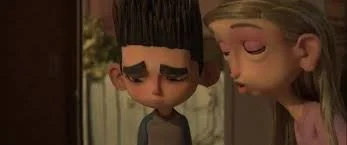
The next morning, Norman walks to school like it is any other day, except he moves through Blithe Hollow like someone walking two paths at once. He chats boldly with the dead, being his polite, kind, and sweet self. The living hurry past him, muttering about his oddness, while the dead greet him gently from benches and doorways, tethered to the town by unfinished breaths. Norman speaks to them without fear. We potatoes know that feeling, of being more at ease with those who listen than with those who judge.

Norman does make it to school, but he is far from welcomed there. The other students think he is weird, and often mistreat him. He walks up to his locker… FREAK written in black permanent marker across the door. As he cleans it off, Alvin (Christopher Mintz-Plasse), the school bully, pops up to harass him. Fortunately, they only exchange a few words, but Alvin does throw his weight around, implying that he has no problem escalating to violence.

Norman rolls his eyes as Alvin saunters off with his cronies. But you can truly feel his quiet frustration, and weariness. He has been treated this way for a long time and is somewhat used to the nonsense.

We cut quickly to an older woman shouting, “You stink of illiteracy!” We are now in what appears to be the school gymnasium. The kids are preparing for a play… not just any play. A play that is supposed to teach the “history” of the town and help to sell merchandise.

Blithe Hollow takes great pride in its spooky history. There are witch-themed souvenirs in every shop, a school play they are preparing for retelling the tale of the witch’s curse. The town packages horror into celebration, turning old violence into a novelty attraction. The story they tell is simple! A witch cursed them, and they survived because they were righteous and afraid in the correct way. “Strict and devout settlers who came here to build a home, a place without sin!” We potatoes felt a chill here. A story repeated often enough can soften into folklore, but that does not mean it was ever honest.
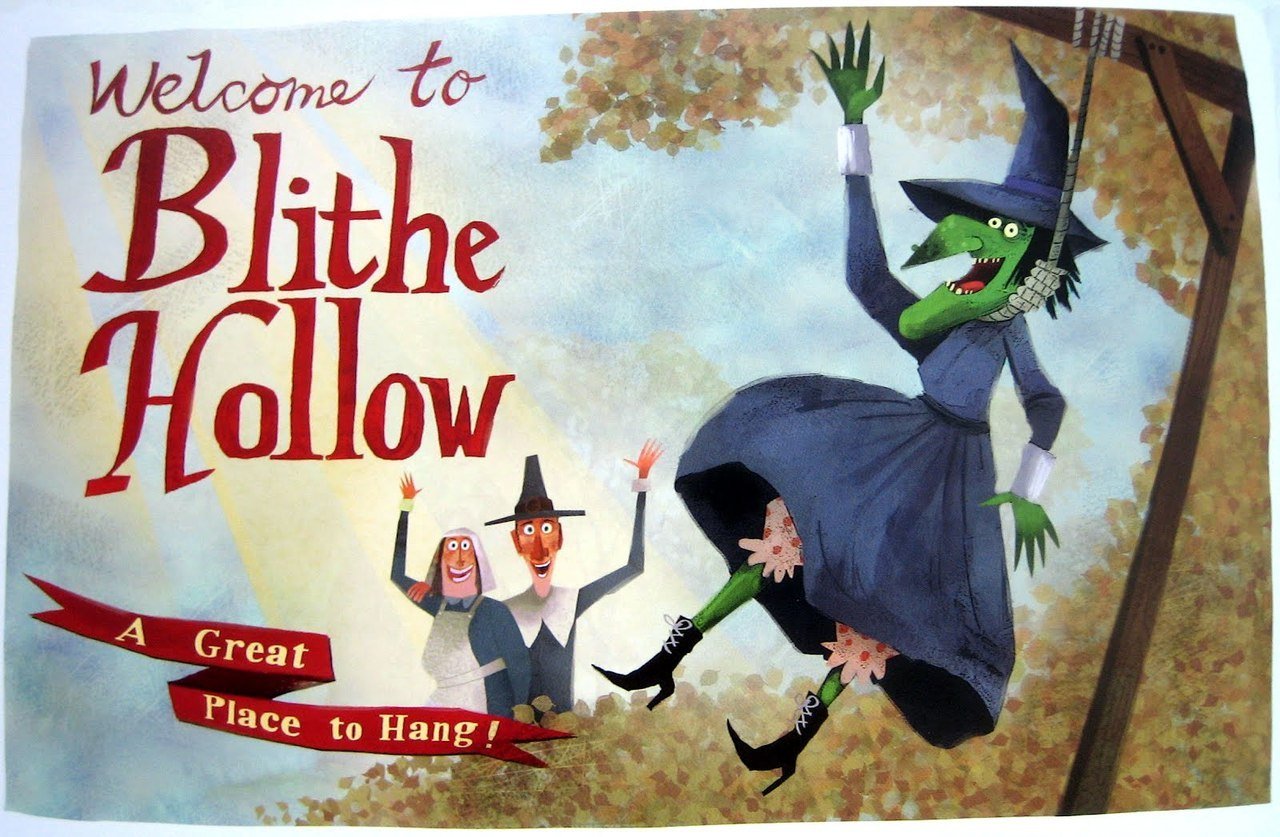
The children practice the play, and it is not going well and Alvin is, of course… Alvin. But fortunately, the bell rings, and it is the end of the day! Norman does not entirely buy what the town is selling. He can feel the lie shivering beneath the legend. When a strange relative shows up on his walk home from school! His uncle Mr. Prenderghast (John Goodman), who is an outcast much like himself, warns Norman that the yearly ritual to keep the curse at bay must not be forgotten! Norman tries to understand, but no one gives him the whole truth, and it is all incredibly confusing at first! The film keeps its secrets, and we appreciate that. Horror should unravel like a thread, not drop like a stone.

Wrapping up from here so as not to give too much more away, but let us just say the curse is real and the dead rise from their graves! It could have been played only for laughs, because yes, the zombies are funny in that uncanny, stiff-limbed way. The film lets itself be joyfully spooky, chaotic, and full of crooked-limbed slapstick. But if you look closer, you can see that these creatures are frightened. Their movements carry panic rather than hunger. They are not hunting. They are haunted.

The town panics immediately, the living doing what they have always done when afraid, clutching pitchforks and certainty. Feral with fear, they trample over anyone who hesitates. “Let’s rip them apart!” And here is where ParaNorman becomes something rare. It stops being about a boy who sees ghosts. It becomes a story about what happens when a community decides that fear justifies cruelty, and how we need people who are different to shed light on the truth.

We’ll tread lightly here, because the film’s reveal deserves to unfold on its own. The witch in the story was not an old crone with warts and a cackle. The town’s legend, told with so much pride, stands on a grave of lies. We will not disclose more, but it is not only incredibly sad, it also speaks to how history that isn’t flattering to those in power is often warped to suit their narrative or completely erased. They do not care about what the truth is; they care about their image.

The film lets the truth bloom slowly. It does not expose it. It grieves it. And that, we potatoes believe, is what makes ParaNorman so powerful. Norman is not a hero in the traditional sense. He does not save the day by being stronger or louder. He saves it by being present. By listening. By sitting with pain that others wanted buried forever.
Watching this in 2025 feels heavier than it once did. We are living through a resurgence of false narratives, attempts at re-writing, or even erasing history, and blatant attacks on anyone different. There is a rising tide of misinformation dressed up as concern, of fear disguised as safety. “They are a danger,” some whisper. “They must be controlled.”

We potatoes know this rhetoric all too well, and it hit particularly close to home here. As neurodivergent people we understand Norman deeply. We have seen for ourselves schools choosing punishment over understanding. We see entire institutions today trying to erase us and reshape us all into something quiet and obedient rather than curious and alive. We see them wanting to shove us back into closets, disappointment rooms, and more… wanting those of us who do not fit into the status quo to disappear. These are not harmless misunderstandings, and we potatoes personally refuse to conform. We refuse to disappear. We all have every right to be here, every right to speak our truths, every right to dignity, safety, and the freedom to live our lives loudly. We odd ducks have always been here, and we will continue to be here.

What moves us potatoes most is how the film treats empathy. Not as a soft extra, but as a radical act. Norman does not defeat a witch. He speaks to someone who was hurt. He apologizes, not as a hero claiming responsibility he does not own, but as someone acknowledging pain that was never mourned properly. He does what no one did for her. He sits with her sorrow instead of fearing it. He gives her what he has always needed, he listens. That moment… we potatoes felt it like a pulse through the chest.

Visually, ParaNorman is a delight! The claymation is textured, crooked, rich with detail, everything feeling touched by human hands and ghost fingertips. Sickly greens seep into twilight purples and candlelit oranges, giving the world a rot-tinged autumn glow. The humor is dark but affectionate, never punching down, always edging toward understanding. We have to give a brief shout out to Neil (Tucker Albrizzi)! Such a kind, funny, and wonderful friend for Norman. We love him! Even all of the side characters, who begin as punchline archetypes, slowly crack open to reveal fear, confusion, and softer hearts beneath their dramatics. People are rarely just one thing, the film whispers. Not witches. Not weird kids. Not even zombies.

Is ParaNorman perfect? No. But it’s so incredibly cute and sincere. There are a few pacing beats that wobble, but honestly, this hardly matters. What matters is that this film is honest. It believes that the weird kids are not broken. That people who are different, who experience and see the world differently, are necessary. It reminds us that silence is not the same as peace, that empathy is always the answer, that difference and diversity is essential to our world and that curses do not end when you bury the truth. They only end when the truth is revealed, and you listen to it.

So, if it has been a while since you wandered through Blithe Hollow, consider this your flickering invitation! We potatoes highly recommend this one! Watch with your heart open, laugh at the absurdity, then breathe in the moment the tone shifts, when the fog feels a little too cold and the story feels a little too familiar.
Cheers to Norman, the boy who spoke to the dead because the living would not hear him! Cheers to the ghosts who only wanted to be acknowledged, and to the living who still have time to learn how. Cheers to everyone who does not fit the status quo, who stands out and stands up for others! And cheers to all the sensitive, strange, neurodivergent potatoes reading this, you are not a curse. You are a lantern. Let us all keep shining, even when the town calls it something else!

We give this film 4 out of 5 Ghost cocktails!
The ParaNorman Drinking Game
Take a sip anytime:
1. Anyone says "Norman"
2. Anyone says “witch”
3. Norman sees dead people
4. Norman talks to anyone dead
5. Norman has a vision
6. Courtney is on her phone
7. Alvin's a jerk
8. Neil is adorkable
9. Norman's Dad SUCKS
10. Mitch does or says something stupid
What did you think? Did you like the movie? Did you hate it? What movies should we watch? Any and all thoughts are welcome! Let us know in the comments!
Do you like this drinking game? Are there rules missing? Is the game too intense? Are there movies that you think we should make a drinking game for? Let us know in the comments and always remember to be safe and drink responsibly! (Drinks can be water, soda, anything nonalcoholic, etc. Please be safe, have fun and take care of you!)